

Fuel management tactics shaped Chris Buescher’s recovery on August 9, 2026, at the Iowa Corn 350, where he started 27th and finished 13th at Iowa Speedway. RFK Racing reported that Buescher and the No. 17 team used a 137-lap fuel-saving run on a single tank during the 350-lap NASCAR Cup Series race, turning a difficult day on pace into a solid points-saving result RFK Racing recap.
For racers outside the Cup garage, the lesson is not that every event can be won with mileage. The better lesson is that discipline can keep a driver in the fight when outright speed is missing. Buescher’s car did not have the speed to run with the leaders, but the team’s plan helped him gain 14 positions from his starting spot. That is the kind of result every grassroots racer understands: some days are not about having the fastest machine, but about making the best decision lap after lap.
Fuel Management Tactics At Iowa Speedway
Fuel Management Tactics In Practice
The Iowa Corn 350 was completed on August 9, 2026, at the 0.875-mile Iowa Speedway in Newton, Iowa. The race rewarded teams that could stretch a run, avoid losing laps during pit cycles, and keep track position when the field sorted itself out over long green-flag stretches. Buescher’s 31st-place result in Stage 1 and 22nd-place result in Stage 2 showed that the day did not begin with easy momentum.
The late improvement came from a strategy built around saving enough fuel to extend the run. Buescher described the approach after the race as “really my name of the game,” and Speedway Digest noted that only 10 drivers finished on the lead lap, a sign of how much long-run execution mattered at Iowa Speedway Digest analysis.
Why Track Position Mattered
Track position is often discussed like a setup problem, but it is also a driver-behavior problem. A racer who burns too much fuel early can force the team into a shorter window. A racer who saves too aggressively can lose touch with the group that matters. The Iowa result gave racers a clear case study in fuel management tactics: the driver, crew chief, and pit crew had to accept short-term limits to earn a better finish later.
That is not glamorous work. It means the driver may have to resist the urge to attack every corner entry. It means the crew may need to hold firm on a plan while lap times or stage positions look ordinary. For a driver trying to build confidence, that can be mentally demanding. Good fuel strategy asks the whole group to believe in the same clock, not just the current running order.
What Buescher’s Iowa Recovery Teaches Drivers
Patience Can Be A Performance Tool
Racers often think of performance as braking later, rolling more speed, or finding drive off the corner. Those skills matter, but patience is also a tool. At Iowa, Buescher’s recovery came from managing what the car could give on that day. Instead of chasing a pace the car did not appear to have, the No. 17 team used fuel saving and pit timing to protect the finish.
In club racing, karting, endurance events, and stock-car divisions, patience starts before the green flag. Drivers should know the planned fuel window, the safe margin, and the signals that mean the plan has changed. If the driver understands the strategy, a request to lift earlier or conserve for several laps feels like part of the job, not a surprise.
Technique Still Has To Stay Clean
Fuel saving should not turn into sloppy driving. Smooth throttle application, predictable corner entries, and reduced wheelspin can help a driver conserve without giving away more time than necessary. Those habits also protect equipment. As a maintenance writer, I look at fuel strategy and mechanical care as connected: a driver who is gentle with inputs often gives the car a better chance to stay consistent late in a run.
That same mindset appears in driver development work. If you are building your craft beyond oval racing, our breakdown of F4 driving techniques covers practical habits such as car control, starts, data review, and race craft. The vehicle may be different, but the driver’s responsibility is familiar: understand the machine, listen to feedback, and repeat good habits under pressure.
Race-Day Preparation For Fuel-Saving Runs
Build The Plan Before The Trailer Door Opens
A smart fuel run starts long before the driver buckles in. Teams should arrive with a fuel log from prior sessions, notes on caution patterns if the series provides that information, and a clear target for the opening run. The goal is not to predict every lap. The goal is to prevent confusion when the race starts to change shape.
For racers balancing work, family, and limited shop time, a simple checklist helps. Confirm the fuel cell or tank condition, cap security, vent routing, and any series-required safety parts. Verify that the fuel load matches the plan and the rulebook. Keep notes after each race so the team is not guessing the next time it faces a long green stretch.
- Set a fuel window: Know the planned stop range and the emergency number before the race begins.
- Agree on language: Use short radio calls or pit-board signals that the driver can process under stress.
- Review driver habits: Decide where lifting, coasting, or short shifting makes sense for the track and car.
- Protect the equipment: Check fuel-system parts during prep, not after a problem appears at the track.
Make The Driver Part Of The Math
Some teams keep strategy locked on the pit box. That can work at higher levels with deep support, but many local racers benefit from understanding the numbers. A driver who knows why the team is saving fuel is more likely to commit to it. That commitment matters most when another car is close enough to tempt an unnecessary fight.
Buescher’s Iowa result showed that a racer can gain by accepting the assignment. His finish did not come from dominating the field. It came from staying attached to the plan on a day when early-stage results were not flattering. That makes the race useful for drivers who are still learning how to turn a rough start into a respectable finish.
Community Support Behind Smart Strategy
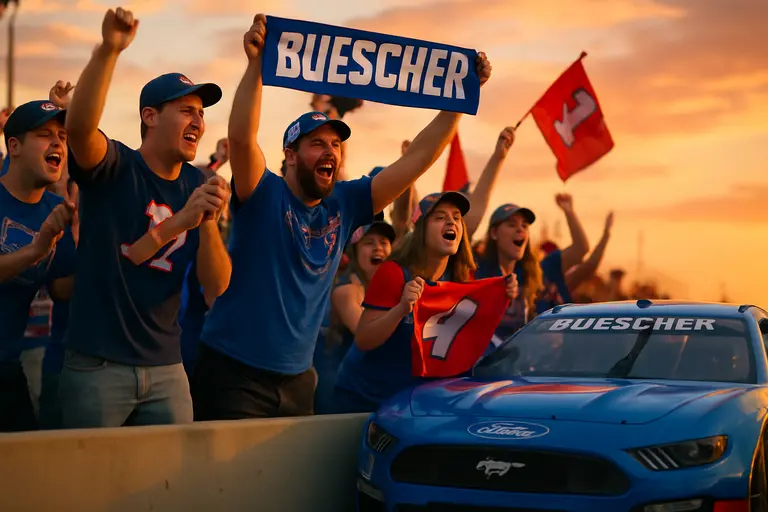
The Crew Keeps The Driver Grounded
Fuel strategy is a community effort inside a race team. The driver feels the pressure in the seat, but the crew handles the math, the stop timing, and the emotional reset after a poor stage or a slow run. In grassroots paddocks, that crew may be a parent, spouse, friend, or a small group that has already worked a full week before loading the trailer.
That support matters because saving fuel can feel passive from inside the cockpit. The driver may need reminders that the plan is working even if the position has not improved yet. A calm voice, clear signals, and steady pit work can keep frustration from turning into wasted throttle. Athlete support is not limited to racing; readers who follow development and preparation across sports can also visit World Football Idol for insights and stories from athletes around the world.
Balancing Ambition And Responsibility
Most racers do not have unlimited tires, engines, or travel budgets. A finish like Buescher’s 13th at Iowa is a useful reminder that intelligent racing can protect resources and morale. Bringing the car home with a better-than-starting result can keep a season alive, help a sponsor see progress, and give the crew a reason to keep pushing.
That community impact is easy to overlook. A driver who listens to strategy shows respect for the people who prepared the car. A crew that explains the plan shows respect for the driver’s focus. Strong teams grow from that exchange. The race result belongs to the whole group, not just the person holding the wheel.
Fuel Management Tactics For Club Racers
Fuel management tactics are not reserved for national series teams. The Iowa example gives club racers a practical model: know what the car lacks, protect what it does well, and give the strategy enough time to work. Buescher did not need to lead laps for the lesson to matter. He started deep in the field, struggled in the stages, and still finished 13th because the team found a path that fit the race.
For your next event, treat fuel planning as part of driver technique, not only a crew calculation. Practice smooth inputs. Talk through the fuel window before the race. Keep written notes on what the car used, how the cautions affected the plan, and where the driver could save without losing too much pace. Over time, those notes become a team asset.
The strongest takeaway from Iowa is simple: a racer does not have to accept a poor day just because the car lacks speed. With trust, patience, and a clear plan, fuel management tactics can turn damage control into a finish that supports the season, the team, and everyone who helped get the car to the track.