

Kelvin Fu leadership at Honda Racing Corporation USA began on September 12, 2026, after Fu succeeded David Salters as president. For racers, engineers, crew members, and families who build their weeks around competition, the change matters because HRC US sits close to the daily work of performance: power units, chassis feedback, race operations, and the shared trust between factory staff and teams.
Fu arrived in the presidency with a technical background that is unusually deep even by motorsports standards. Honda Racing Corporation USA reported that his education includes bachelor’s and master’s degrees in mechanical engineering from the University of Michigan, followed by a PhD and postdoctoral work tied to UC Berkeley and UW–Madison, and that he joined Honda Performance Development in 2015 before later becoming director of programs and vice president Honda Racing’s announcement.
That résumé does not win races by itself. What it can do is shape a working culture where data, driver feel, crew feedback, and clear preparation all meet before the green flag. For a community built on long hours and narrow margins, that kind of structure gives racers a better chance to focus on execution rather than distraction.
A Leadership Change With Clear Roots
From Engineering Study To Race Operations
Fu’s path into the top HRC US seat began far from pit lane, through mechanical engineering, research, and senior aerospace R&D roles before Honda. That background is relevant because modern racing programs rely on more than horsepower. They ask people to connect simulation, testing, hybrid systems, aerodynamics, driver comments, and fast repair decisions under pressure.
Within HRC US, Fu worked in areas that sit close to performance, including chassis design, aerodynamics, and performance engineering. The research notes also show that he became director of programs in 2020 and vice president in 2021. Those roles put him near the work that racers feel most directly: how a car responds, how a program sets priorities, and how engineers keep trackside issues from becoming repeated setbacks.
Why Continuity Matters To Teams
Leadership changes can unsettle a paddock when they come without context. This one carried continuity because Fu had already been inside the HRC US system for years. The organization also credited HRC US under Fu as vice president with helping Honda achieve four of its 17 Indianapolis 500 victories. That fact gives teams a record to measure, not just a title change to discuss.
For drivers and crews, continuity is not about comfort alone. It helps protect relationships. A driver who trusts an engineer is more likely to give honest feedback after a difficult stint. A crew chief who understands the factory’s process can sort urgent fixes from long-term development. The leader’s task is to keep that trust active, especially after the hard weekends.
How Kelvin Fu leadership Guides HRC US
What Kelvin Fu leadership Means For Racers
The practical measure of Kelvin Fu leadership will be how well HRC US turns technical work into usable race support. A driver does not experience leadership as an org chart. They feel it in the way information arrives, how quickly concerns are heard, and whether the program helps them prepare with confidence.
That is where Fu’s engineering background connects with the human side of motorsports. Race weekends ask athletes to absorb pressure, make quick adjustments, and stay calm after a mistake or mechanical issue. A clear technical program can reduce noise around the driver. It gives them fewer mixed messages and a stronger plan for each session.
IndyCar Success As A Shared Standard
The research notes state that in the 2025 NTT IndyCar Series, which concluded on August 10, 2025, in Portland, Honda and HRC US completed a sweep of the drivers’ championship with Alex Palou, the manufacturers’ championship, and the Indianapolis 500. They had 12 wins in 15 races by that point. The 2025 season also marked Honda’s seventh manufacturers’ championship in the modern IndyCar era and its 11th in American open-wheel racing.
Those results belong to many people: drivers, team personnel, HRC US staff, suppliers, families, and travel crews who carry the grind from one stop to the next. Kelvin Fu leadership now inherits the responsibility of helping that standard stay productive without treating people as interchangeable parts. Sustained success in racing depends on pace, but also on energy management, listening, and respect for the work done away from cameras.
IMSA Lessons For Teams And Crews
A More Direct Factory Hand
In sports car racing, the research points to a more direct HRC US engineering presence in the Acura ARX-06 IMSA GTP program. Sports Illustrated reported that HRC US took a closer engineering position with the #93 Acura ARX-06 effort, linking factory and team operations in a way meant to improve response and development Sports Illustrated’s IMSA report.
That matters because endurance racing exposes both machine and community. The driver lineup, engineers, mechanics, strategists, and support staff all carry the race together. A factory group that works nearer to the team can shorten the distance between a problem, a diagnosis, and a fix. It can also help the people inside the program feel that their feedback has a path upward.
Resilience In Longer Races
The Acura IMSA notes from 2025 showed second place in the manufacturers’ championship, with two wins, four pole positions, and podium finishes at Road America and the 12 Hours of Sebring. The #93 ARX-06 secured wins at Detroit and at Sahlen’s Six Hours of The Glen. These were completed results, not projections, and they show a program that had both speed and learning points.
For racers, resilience is not just a motivational word. It is the habit of returning to the debrief after disappointment, asking better questions, and staying connected to the people who help shoulder the load. In that sense, factory-team integration is not only technical. It can support healthier preparation because people know where responsibility sits and how information is shared.
Race-Day Preparation Under Technical Pressure
Preparation Starts Before The Track Opens
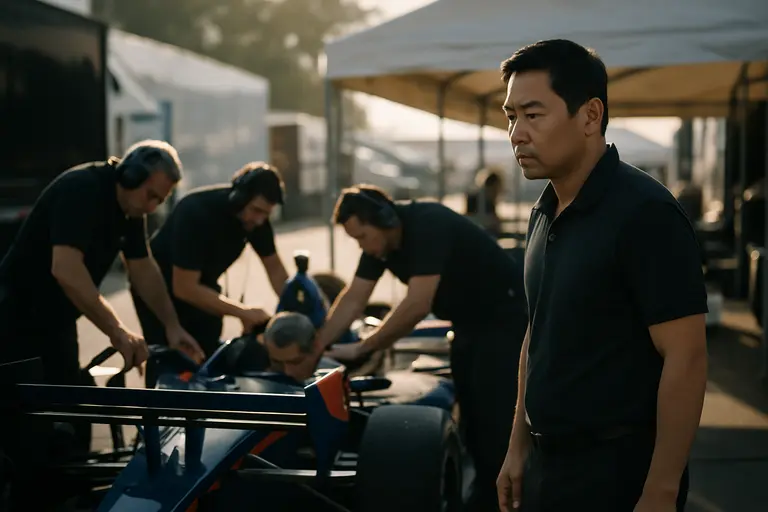
Race-day readiness is often built in quiet spaces: engineering rooms, shop floors, simulator sessions, family calendars, and travel plans. The HRC US story under Fu points toward preparation that starts early and keeps communication tight. For younger racers and grassroots teams watching from outside the factory gates, Kelvin Fu leadership offers a useful reminder: preparation is a team behavior, not a single person’s talent.
That principle reaches every level of motorsports. A driver can build better habits by reviewing notes promptly, arriving rested, and making debriefs specific. Crew members can protect performance by keeping checklists clear and avoiding blame-heavy language. Families and supporters can help by respecting the mental reset a racer may need after a session.
Practical Habits Racers Can Borrow
Factory racing programs have resources most local racers do not, but the habits behind them can travel. The point is not to copy HRC US equipment. It is to borrow the discipline of shared preparation and adapt it to the budget, schedule, and people available.
- Write down driver feedback quickly: Capture what the car did, where it happened, and whether the issue repeated.
- Assign clear responsibilities: One person should know who handles tires, tools, notes, food, or transport.
- Keep debriefs respectful: Talk about the lap, setup, and decision points without turning feedback into personal criticism.
- Protect recovery time: Sleep, meals, and short breaks help racers process pressure more clearly.
Community makes those habits easier. Local families, crew volunteers, and friends often become the support system that keeps a racer going after a tough weekend. Readers interested in sports culture and community can explore related themes on Texas Sportsmen, a related site in the same network.
Kelvin Fu Leadership For Racer Communities
What The HRC US Example Gives The Paddock
The value of Kelvin Fu leadership for the wider racing community is not limited to the front of the grid. It gives racers and supporters a model built around preparation, technical curiosity, and collaboration between people who see the car from different angles. Engineers bring data. Drivers bring feel. Crew members bring hands-on knowledge. Families bring patience, time, and encouragement.
Since Honda Performance Development became Honda Racing Corporation USA in 2023, the organization has been tied more closely to HRC Japan and broader Honda racing activity, according to the research notes. That alignment gives HRC US a larger setting, but the day-to-day test remains local to each program: can the people closest to the race work together with clarity?
Fu’s presidency was only two days old as of September 14, 2026, so any claim about future results would be premature. What is supported is his technical background, his years inside HRC US, the organization’s recent IndyCar success, and a more direct engineering presence in IMSA. For racers and their communities, those facts point to a grounded lesson: success is built by people who prepare together, communicate honestly, and keep showing up for one another after the checkered flag.