

For racers, families, and crew members, rain racing gear is not a side topic after a wet MotoAmerica weekend at New Jersey Motorsports Park. On September 26, 2026, scattered but steady showers kept Thunderbolt Circuit wet for much of the day, and MotoAmerica reported that teams used Qualifying 2 to dial in race setup for a fully wet Supersport Race 1 rather than simply chase lap time in the Saturday NJMP report. That is the kind of detail club racers should pay attention to: wet preparation is not about buying one magic part. It is about matching tires, setup, rider protection, and crew habits to the track that is actually in front of you.
The NJMP round gave a clear reminder that weather compresses decision time. Riders and crews had to read a changing surface, manage confidence, and make equipment calls with consequences that showed up before the green flag. The public race reports did not list every suspension click or gearing decision, so the safest reading is to focus on what was verified: wet track time changed priorities, tire choices mattered, and a missed setup detail could put a rider on the back foot before the race settled in.
Rain Racing Gear Starts With Track Conditions
What MotoAmerica Faced On September 26
The Thunderbolt Circuit did not offer a simple dry-line problem on September 26, 2026. The showers were described as scattered but steady, and the track stayed wet enough that teams treated Supersport Race 1 as a fully wet contest. That changes the racer’s workday. A session that might usually be used to find outright speed becomes a test of feel, stability, and repeatable control. The value of rain racing gear showed up in how teams prepared: they used available track time to make the bike manageable for a wet race distance.
From a gear reviewer’s seat, that is the practical lesson. Wet equipment has to work as part of a system. Tires need to match the surface. Controls need to feel predictable through gloves. Boots need to support the rider during awkward paddock movement and on-bike weight shifts. Crew members need a clean process for wheel changes and checks because wet weekends can punish rushed work.
Race Setup Over Lap Time
Chasing a time sheet can be tempting, especially when a rider knows the field is close. But the NJMP notes point to a smarter priority: set the bike up to complete the wet race with confidence. Public reporting did not confirm each exact setting used by every team, and that matters. We should not pretend to know private setup sheets. What is supported is that teams were adapting for a wet race environment, and that the decision to use qualifying time for setup rather than headline pace was part of the day’s story.
For amateur and developing riders, the same principle applies at a smaller scale. A wet race plan should be written before the panic starts. Decide who checks tire pressures, who confirms axle and alignment work, who inspects gloves and boots, and who keeps the rider focused on simple feedback after each session. The best wet setup is not only mechanical; it is organizational.
Tires, Setup Choices, And Risk Management
Rain Racing Gear Checks Before The Warm-Up Lap
One of the most useful lessons from Race 1 involved Kyle Wyman’s mixed tire gamble. According to the September 26 report, Wyman used a rear slick with a front rain tire in changing conditions. He had started second, but a wheel alignment issue for the warm-up lap led to a pit-lane start and a major loss of position. That sequence is a hard reminder that rain racing gear is only as strong as the verification routine around it.
Mixed conditions create difficult calls. A slick may make sense if the track is drying enough, while rain tires can help when water remains on the surface. The research also notes past NJMP examples where riders and teams faced discomfort, sliding, and tire-gamble decisions in mixed or wet conditions. The common thread is not that one tire choice always wins. The point is that every choice must be paired with a check process that catches the basics before the bike leaves pit lane.
How Tire Limits Shape Decisions
The 2026 MotoAmerica Technical Regulations state that a maximum of twelve tires per rider are allocated for an event, while King of the Baggers wet tires are not required to be marked with tire stickers and are not counted within that total tire number, as listed in the 2026 technical regulations. That rule context matters because rain weekends are not just about what tire is fastest in one moment. Teams also have to manage availability, timing, and class-specific rules.
On September 27, 2026, the final day at NJMP was delayed after overnight storms left standing water on the track. Races that did run were wet from flag to flag, and the Supersport Race 2 margin between Darryn Binder and Josh Herrin was reported at 0.137 seconds. That narrow gap shows why tire and setup decisions carry so much weight. In the wet, small differences in rider confidence and bike behavior can become race-defining.
Rider Protection And Crew Habits In The Wet
Boots, Gloves, And Skin Coverage
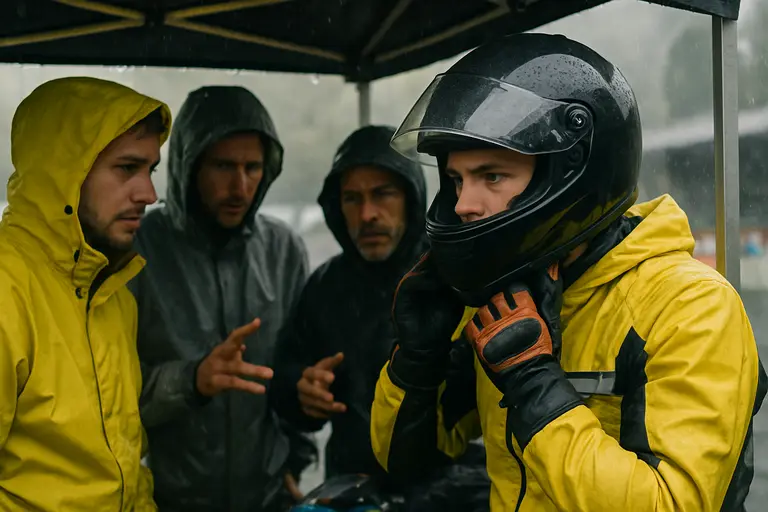
Rain puts extra attention on the contact points between rider and machine. The NJMP rider gear rules in the research specify race-style boots covering the ankle and gauntlet-type gloves that leave no skin exposed. Those requirements are not rain-only items, but they become even more meaningful when grip and visibility are reduced. A rider who is worried about exposed skin, loose closures, or poor control feel has one more distraction at the worst possible time.
For developing racers, this is where gear habits should be boring on purpose. Gloves should be checked for fit and closure before the session. Boots should be secured and comfortable enough for repeated starts, stops, and paddock movement. Riders should confirm they can operate controls smoothly with wet-session gloves before they roll out. Families helping newer racers can build those checks into the same pre-session rhythm used for fuel, tire warmers where permitted, and helmet preparation. For more safety-first planning, our related piece on new racer gear priorities keeps the focus on fit, habits, and parent-led routines.
Community Support Behind Wet-Weather Starts
Wet race days test more than machinery. They test patience in the paddock, communication between rider and crew, and the ability to reset after a mistake. Families and volunteers often become the calm center of that process. One person can keep the schedule. Another can watch the sky and session calls. Another can help the rider talk through feel without adding pressure. That shared work is part of why motorsports communities stay strong through hard weekends.
For readers who follow motorsports and community sports stories across our wider network, Noticias BO provides comprehensive updates and coverage. This resource offers an expansive view on various sports topics, echoing the community support found here at the track: riders perform better when surrounded by supportive individuals who help maintain focus and reduce distractions.
- Confirm tire choice and fitment before the rush. Wet and mixed conditions make last-minute changes more likely, so assign a clear checker.
- Use wet sessions for feel, not pride. If the track stays wet, repeatable feedback can be more valuable than one brave lap.
- Protect the rider’s contact points. Boots and gauntlet gloves should be secure, comfortable, and session-ready.
- Keep communication short. Ask what the rider felt, what changed, and what needs attention before the next outing.
Adapting Gear For Rainy Conditions At NJMP
What Club Racers Can Carry Forward
The NJMP MotoAmerica weekend on September 26-27, 2026, showed that wet preparation is a full-team discipline. Tires drew the obvious attention, but the deeper lesson was process. Teams had to use qualifying time with purpose, verify the mechanical basics, protect riders with required boots and gloves, and stay calm when the track surface changed the plan.
For racers building rain racing gear plans after NJMP, the target should be simple: make every wet-weather decision easier before the bike reaches pit out. Know the rules for your class. Understand how tire allocation affects your choices. Treat wheel alignment and fitment as non-negotiable checks. Keep rider protection consistent. Most of all, build a crew culture where a wet session becomes a shared task rather than a scramble. That is how racers bring lessons from a national paddock back to club garages, family trailers, and the local teams that keep this sport moving.