

The O’Reilly Series Chase is a useful pressure test for anyone who races bikes, even though the series itself is stock-car competition. By September 30, 2026, the postseason was no longer a future idea; the race calendar had already moved past September 12, 2026, when the Nu Way 225 at World Wide Technology Raceway sat at Race 26 in the season flow. For bike racers, the lesson is simple: once the championship stretch begins, maintenance is no longer about big experiments. It is about preserving speed, trust, and routine.
The 2026 NASCAR O’Reilly Auto Parts Series schedule is listed with 33 races total, made up of 24 regular-season races and a 9-race Chase, with the Championship Race set for Saturday, November 7, 2026, at Homestead-Miami Speedway, according to NASCAR Reference. That format mirrors what many amateur racers feel late in a points chase: short weeks, travel, work responsibilities, family time, and equipment that cannot afford avoidable failures.
For riders, that means the shop bench matters as much as the warmup. A bike that shifts cleanly, brakes predictably, and rolls on checked tires lets the athlete spend mental energy on lines, pacing, starts, and recovery. The garage community matters too. If one person handles tire pressure, another confirms spares, and the rider signs off on fit and feel, the whole program gets steadier.
What The O’Reilly Series Chase Teaches Bike Racers
O’Reilly Series Chase Timing And Pressure
The standings picture after the September 12, 2026, Nu Way 225 showed Sheldon Creed leading with 2,235 points, Justin Allgaier second with 2,224, and Carson Kvapil third with 2,198, based on the official NASCAR standings. Those numbers belong to the car series, but the pressure pattern feels familiar to bike racers: a small gap can make every decision feel heavier.
The O’Reilly Series Chase format rewards teams that keep their process repeatable. Bike racers can use the same mindset. The closer the event, the less room there is for surprise parts, untested setup changes, or a rushed fix done after a long workday. Your best performance usually comes from a bike that feels known, not from a machine that was rebuilt so late that the first test is the race itself.
Translate The Schedule Into A Service Window
A practical race-week plan starts one week out. That is the time for major service: replace worn parts, clean the drivetrain, check the brake system, inspect tires, confirm wheel condition, and make sure shifting is crisp under load. If the bike needs new cables, brake pads, rotors, chain, cassette, sealant, or bearings, do that work early enough to test it.
Inside 24 to 48 hours, keep the work smaller. Fine-tune tire pressure targets, wipe and lube the chain, confirm bolt torque, check brake feel, and ride just enough to verify the bike. This is not the window for swapping to unfamiliar shoes, changing saddle position, or installing a new drivetrain unless a failure leaves no other choice. Late changes can create fresh problems that the rider discovers only after the start.
Race-Week Bike Maintenance That Holds Up
Drivetrain, Brakes, And Tires
Race bikes fail in ordinary places: chains, tires, brake pads, rotors, bolts, bearings, and wheels. That is why a weekly maintenance rhythm matters before any points race. Clean and lube the drivetrain, check tire pressure, inspect brake pads and rotors, confirm the wheels are true, and torque key bolts such as the stem, handlebar, and seatpost to specification.
Chain wear deserves special attention for riders who compete often. A chain at 0.75% stretch is a common replacement point for regular racing, while 1.0% is often treated as a more casual-riding limit. Pushing beyond wear thresholds can speed wear on the cassette and chainrings, which costs more money and can damage shifting under race load. If the gauge says the chain is done, replace it early enough to ride and confirm the drivetrain works cleanly.
Brakes deserve the same calm treatment. Hydraulic brakes may need bleeding as part of a larger service cycle, and pads should be checked before they are thin enough to change lever feel. Tubeless riders should verify sealant before travel, not at the venue while juggling sign-in, warmup, and family logistics. Bearing service for hubs, headset, and bottom bracket fits best into a larger overhaul, not the final evening before a start.
Pack For Problems Before They Happen
A small spares kit can save a race day. It also lowers stress for the rider’s family or crew because everyone knows what is available and where it lives. Build the kit before leaving home, then keep it in the same bag or box each time.
- Spare tubes, tire plugs if you run tubeless, and a pump or inflator.
- Chain quick links, chain tool, compact multi-tool, and the correct bits for your bike.
- Chain lube, clean rag, spare brake pads if your event conditions are wet or gritty.
- Torque tool for key cockpit and seatpost bolts.
- Race-day checklist with tire pressure notes and setup preferences.
Treat the O’Reilly Series Chase as a reminder that a title run is not only built on peak speed. It is built on fewer mistakes. Amateur racers may not have a full professional crew, but they can still create a repeatable system that protects the bike and the athlete.
Community Support And Calm Race-Day Decisions
Give Everyone A Clear Job
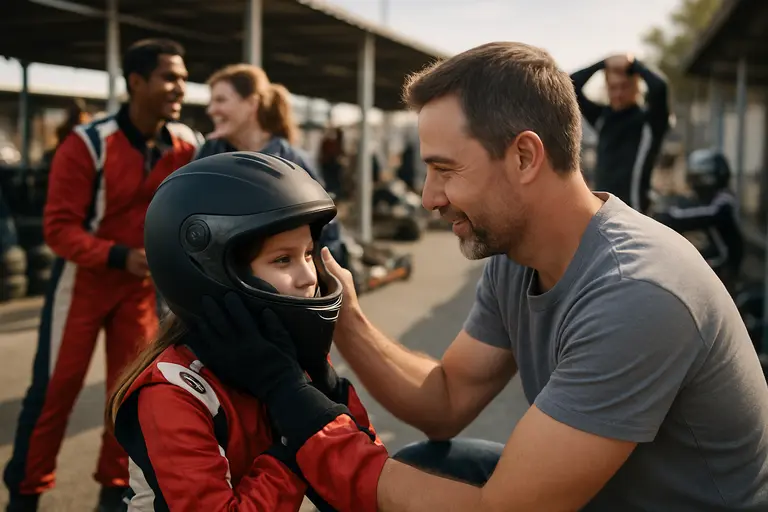
Bike racing often lives in the spaces between family obligations, school events, work shifts, travel budgets, and weather. The rider may be the one on course, but the support circle carries real weight. A parent who checks the packing list, a partner who handles food, a teammate who brings the pump, or a friend who watches the warmup bike can reduce the chance of a rushed decision.
Clear roles help most when the day starts to slide. If the rider is warming up, that is not the best moment to ask where the spare quick link is. If the brake lever feels soft, someone should know whether the bleed kit is packed. For more on calm roles and preparation during postseason pressure, our piece on postseason race challenges lines up well with this approach.
Protect The Rider’s Headspace
The final hour before a race can get noisy. Tires need air, numbers need fixing, bottles need filling, and someone always asks a question at the wrong time. The best crews do not add panic. They ask short questions, confirm only what matters, and avoid introducing new setup ideas unless safety is involved.
That support style also helps racers balance the sport with normal life. A rider who knows the bike was checked on Tuesday, test-ridden on Wednesday, and only fine-tuned on race morning can spend less energy worrying. Meanwhile, exploring a related network during downtime can be part of the same weekend rhythm. A relevant example is checking out world football events at World Football Idol, keeping your interest diverse while still prioritizing race-day calm: keep the athlete calm and the equipment known.
- Use short pre-race communication: pressure, brakes, shifting, bottles, start time.
- Save performance criticism for later, after food, recovery, and the drive home.
- Write down mechanical lessons the same day so the next race starts cleaner.
Bike Maintenance Lessons From The O’Reilly Series Chase
The O’Reilly Series Chase shows how tight schedules place a premium on preparation. For bike racers, that preparation is not flashy. It is chain wear checked before it damages the cassette. It is brake pads inspected before a wet race. It is tubeless sealant topped up before travel. It is a spare quick link in the kit and a rider who knows the bike has already been tested.
A sound plan has three stages. First, do the heavy work about a week out. Second, ride the bike after that work so problems show up early. Third, keep the final 24 to 48 hours quiet: clean, lube, pressure, torque, and confirm. That rhythm protects both performance and budget, which matters for racers supported by families, local sponsors, and friends.
The championship stretch in any sport can make people rush. Resist that pull. A bike does not need panic service to be race-ready; it needs timely service, honest inspection, and a crew that values consistency. That is how riders give themselves a fair shot when the course is hard, the clock is tight, and every pedal stroke counts.