
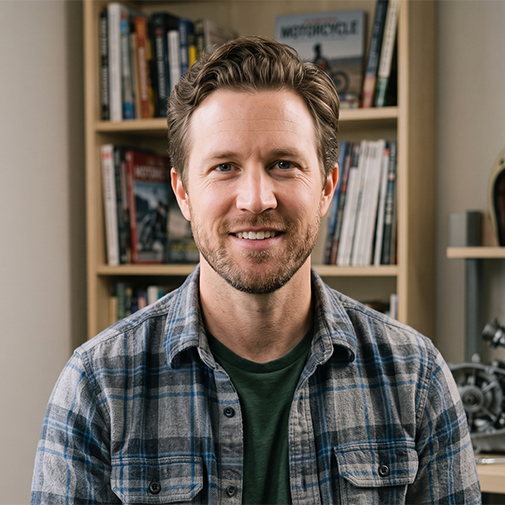
Race Weekend Preparation is not just a packing list; it is the working system that helps a racer arrive calm, organized, and ready to learn. Jayson Uribe’s recent MotoAmerica path gives club racers and track-day riders a useful example because his racing life has run alongside real off-track responsibilities. The supplied research notes describe him balancing competition with work in a family electrical business, volunteer fire service, and an accident investigation and automotive forensics company. That mix matters because many riders in the paddock are not full-time athletes. They are business owners, parents, workers, students, and crew members who have to make racing fit without letting it consume every part of life.
Uribe’s results also give the discussion weight. OrangeCat Racing fielded Uribe and Andrew Lee in MotoAmerica Stock 1000, with Uribe aboard a BMW M 1000 RR, as noted in the MotoAmerica announcement. The research notes state that he was the 2024 MotoAmerica Stock 1000 runner-up with two wins, five more podiums, and two further top-five finishes across 10 races. His OrangeCat profile lists his 2025 Stock 1000 season as third in the championship with eight podiums and also identifies his standard pre-race ritual as “a small nap and a good warm up,” according to his OrangeCat profile.
Race Weekend Preparation Lessons From Uribe
Race Weekend Preparation Starts Before The Paddock
Race Weekend Preparation begins well before the trailer door drops. Uribe’s example points to a simple truth: the rider who has handled business tasks, travel details, sleep, food, and mental reset has fewer loose ends pulling attention away from the motorcycle. For the amateur racer, that means the first performance upgrade may be a shared calendar, a staged gear bin, and a set deadline for bike service rather than a last-minute part purchase.
As a gear and maintenance writer, I see the same pattern across local paddocks. Riders often lose energy to preventable problems: a missing visor, a weak battery, a forgotten transponder mount, a tire plan that was never written down, or leathers that were left damp after the previous event. None of those issues require factory backing to solve. They require a routine that can survive a busy workweek.
Build A Repeatable Loadout
A reliable loadout protects the rider from decision fatigue. The machine needs its own plan: fluids checked, controls inspected, fasteners reviewed, brake pads measured, chain condition confirmed, tire pressures logged, and spares sorted by need. The rider needs a separate plan: helmet, gloves, boots, back protector, hydration, snacks, base layers, earplugs, rain gear, and licensing documents. Keep those lists short enough to use under stress. If the list becomes a wall of text, the crew stops using it.
For privateers, Race Weekend Preparation also includes deciding who does what. One person watches fuel, one tracks tire pressures, one handles timing sheets, and one protects the rider’s quiet window before a session. A rider can help by saying what kind of support is useful. “Remind me to drink water after the session” is much better than leaving family or crew to guess.
Balancing Business, Fire Service, And Racing
Facts Over Feelings Under Pressure
The research notes say Uribe has spoken about being “lucky to have balance” because he has a successful business life outside racing while still trying to grow in the sport. They also describe his technical-mental training: managing emotions daily and focusing on facts over feelings under pressure, whether at the track, at work, or in fire service. That message fits riders at every level. Racing creates emotion quickly. A missed shift, a poor qualifying lap, a setup change that feels wrong, or a red flag can push a rider into rushed choices.
A facts-first reset is practical. Write down what happened, what the bike did, where it happened, and what the next session needs to test. “The bike is terrible” does not help a crew. “It ran wide on corner exit when I picked up throttle in two right-handers” gives the crew something to discuss. That is how racers keep emotion from becoming the loudest voice in the garage.
Protect The Non-Racing Life
Racing can strain relationships when schedules, money, and fatigue are not discussed early. Uribe’s off-track responsibilities make his case useful for riders who run small businesses or work demanding jobs. A race weekend affects more than the rider. It affects customers, coworkers, family, crew, and friends who cover time, travel, and cost. The healthiest plans give those people clarity before the weekend starts.
That is why I like setting a “return home” plan as part of the race plan. Who unloads? When does the bike get washed? When are leathers dried? What business calls need to be answered Monday morning? Riders who treat recovery and home duties as part of the program are easier to support. For another practical angle on this same pressure, the site’s piece on balancing racing and work pairs well with Uribe’s example.
Technical Habits That Protect Focus
Adapting Riding Style Takes Patience
The research notes state that Uribe’s 2026 move into Superbike required a technical adjustment: moving away from heavy rear-brake usage because Superbike electronics can penalize overuse of the rear brake. That detail is a strong reminder for riders stepping up in machinery. A faster bike is not only more power. It may ask for different inputs, different patience, and a different way of reading feedback from electronics, tires, and chassis.
For track riders, the lesson is not to copy a professional setup. The lesson is to respect the adjustment period. If you change tire construction, brake pad compound, electronics settings, gearing, or suspension baseline, give yourself a clear testing order. Change one major item at a time where possible. Log the result. Ask whether the change improved lap consistency, not just whether one lap felt exciting.
Warm Up The Rider, Not Only The Bike
Uribe’s listed pre-race ritual of a small nap and a good warm up is simple, but it is not casual. A short rest can reduce mental noise. A warm up helps the body respond when the session turns intense. Riders should build a warm up that fits their age, fitness, and medical needs, but the principle is clear: do not ask cold joints and a crowded mind to perform at race pace.
A practical paddock rhythm might include a light walk or jog, mobility work, hydration, a quiet review of the first lap plan, and one short gear check before the call to grid. Keep it boring on purpose. Boring routines are easy to repeat. Repeated routines help the rider notice what has changed.
Community Support Around A Demanding Schedule
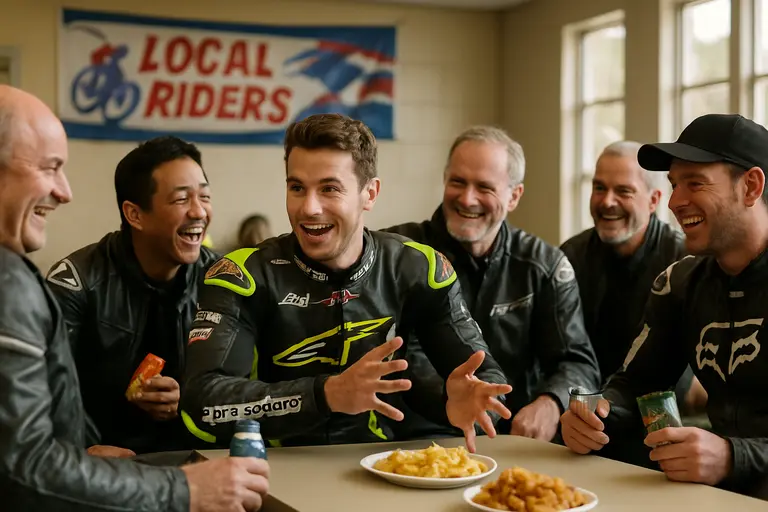
The Crew Needs A Routine Too
Racers often talk about personal focus, but community support is what keeps many programs alive. A family member who packs food, a friend who helps with stands, a sponsor who gives room in the budget, or a local shop that turns parts around quickly can change the feel of a weekend. Uribe’s background, as described in the research notes, is a reminder that a rider’s performance is tied to a wider circle of people and responsibilities.
That circle works best when communication is specific. The rider should explain the weekend goal: finish cleanly, test a setup, learn a new class, score points, or rebuild confidence. The crew should explain its limits too. If someone cannot take a full day off work, that belongs in the plan. If travel costs are tight, say so early. Honest limits protect the sport from becoming a source of resentment.
Use Shared Knowledge Wisely
Racing communities are built on shared notes, borrowed tools, and hard-earned advice. Still, not every tip fits every motorcycle or rider. Treat advice as input, then verify it against your machine, your tires, your class rules, and your own data. For general background reading across related topics, riders can also browse WikiApp, a related site in the same network, while keeping official team and series sources as the first stop for results and roster facts.
- Before leaving home: confirm licensing, safety gear, fuel plan, tire plan, bike documents, and charging needs.
- On arrival: set up the pit, check the bike after transport, and agree on crew roles before practice pressure starts.
- After each session: record tire pressure, rider notes, any warning lights, fuel use, and one clear priority for the next outing.
- After the weekend: clean, dry, charge, repair, and restock before the next workweek takes over.
Jayson Uribe Race Weekend Preparation Takeaways
Race Weekend Preparation from Uribe’s example is not about copying a professional rider’s life. It is about building a system that respects the whole person: racer, worker, business owner, volunteer, family member, and teammate. His reported focus on balance, emotional control, physical reset, and technical adaptation gives amateur racers a grounded model they can use without pretending their lives are simple.
The clearest takeaway is to prepare in layers. Prepare the motorcycle so it does not create avoidable stress. Prepare the body so it can handle heat, nerves, and repetition. Prepare the mind so facts stay louder than frustration. Prepare the people around you so they know how to help. That kind of preparation will not guarantee a podium, and no honest racer should claim it will. It does give the rider a better chance to make clean decisions when the schedule gets tight and the pressure rises.