

As of November 11, 2026, IMSA gear essentials start with one simple responsibility: every driver, crew member, and family-supported team needs to know what the active 2026 rules require before the car reaches pit lane. Good equipment choices protect the athlete, help the crew work with confidence, and reduce avoidable stress during a race week. For racers balancing travel, work, school, family, and budget, the best gear plan is not flashy. It is current, compliant, comfortable, and easy for the whole crew to verify.
IMSA’s 2026 sporting regulations set clear requirements for driver attire, helmets, refueling crew equipment, decals, patches, and certain car identification items. The regulations are not just paperwork for professional paddocks. They offer a practical model for any serious racer: know the standard, check the label, confirm the expiration, and build a routine your crew can repeat under pressure.
IMSA Gear Essentials Start With Certified Driver Wear
Driver gear is the first layer of safety planning. Under the active 2026 IMSA rules, driver fire suits must be homologated to FIA 8856-2000, FIA 8856-2018, SFI 3.2A/5, or SFI 3.4/5, according to the official IMSA sporting regulations. That means the label matters as much as the fit. A suit that looks good but lacks the required standard is not race-ready for IMSA competition.
IMSA Gear Essentials For Suit Labels
IMSA gear essentials should be checked from the inside out. The driver’s fire suit is only one part of the required clothing system. Underwear, gloves, balaclava, socks, and shoes must meet FIA 8856-2000, FIA 8856-2018, or SFI 3.3 standards for all driver positions. That detail matters because a driver may focus on the visible suit while overlooking worn socks, older gloves, or shoes that no longer match the required standard.
For racers coming from club events or mixed-series weekends, this is where a small gear log pays off. Record the homologation standard, purchase date, manufacturer date, and any visible wear after each event. Families and volunteer crew members can help by reading labels during packing, not during the rush before tech inspection. That shared routine keeps the driver focused and gives supporters a useful role that directly improves preparation.
Fit, Comfort, And Repeated Checks
A compliant suit still needs to fit the driver well enough to sit, steer, communicate, and exit the car safely. The regulations identify accepted standards; the team still has to make sure the equipment works for the athlete’s body. Gloves should allow clean switch use. Shoes should let the driver feel pedal travel without bunching. A balaclava should sit flat under the helmet and avoid pressure points around the jaw or eyes.
This is where community support shows up in practical ways. A teammate can watch the driver climb in and out. A parent can photograph the gear labels for the prep folder. A crew chief can add a pre-session “hands, feet, head, suit” check to the call sheet. The best paddocks treat gear checks as care for the racer, not as blame-hunting.
Helmet Rules And Head Protection Checks
IMSA requires full-face helmets meeting FIA 8860-2010 or FIA 8860-2018, with either an Eject Helmet Removal kit or a Stand 21 Lid Lifter Balaclava installed. The 2026 regulations also state that helmets more than ten years past their date of manufacture or expiration are no longer valid after December 31 of the tenth calendar year post-manufacture. FIA 8860-2010 helmets without manufacture dates from before 2013 are prohibited under the same active rule set.
Expiration Dates Are Race-Day Details
A helmet can look clean and still be out of date. That is why helmet age belongs on the same checklist as fuel, radios, drinks, and tire pressure notes. Teams should look for the manufacturing or expiration label well before travel. If the date is hard to read, do not wait until the event to sort it out. Build enough time to confirm the status through the proper rule document or equipment supplier.
For younger drivers and families moving up the ladder, this is a smart teaching moment. Learning how to read safety labels builds ownership. It also helps the family budget with fewer surprises. Replacing a helmet late can strain travel funds, food planning, lodging, or spares. A calm winter or off-week inspection often costs less in stress than a last-minute scramble.
Helmet Systems Need To Be Installed Before The Rush
The required helmet-removal system should not be treated as a loose accessory tossed into a gear bag. It needs to be installed as required and checked before the helmet is packed. Drivers should also test the full head-and-neck setup while seated in the car, wearing the same balaclava and communication gear they plan to use during competition. That check can reveal cable pull, cheek pressure, or visor movement before the car rolls.
For more practical habits around personal preparation, gear condition, and crew timing, our race-day checklist on gear and body prep connects well with the same safety-first mindset.
Crew Gear For Refueling And Fuel Transfer
Refueling work demands disciplined clothing choices. For pit-lane refueling or fuel transfer, IMSA requires the refueler, vent operator, and fire bottle operator to wear a fire-resistant outer uniform meeting FIA 8856-2000, FIA 8856-2018, SFI 3.2A/5, or SFI 3.4. Those crew members must also wear fire-resistant underwear, socks, gloves, balaclava, and shoes under the accepted FIA or SFI standards. A full-face helmet with the face shield down is required for those roles.
Make Crew Assignments Match The Gear
IMSA gear essentials apply to more than the person strapped into the car. A small team may have people crossing between transport, setup, radio support, food runs, and pit duties. That flexibility helps the group survive long days, but refueling tasks require the right gear for the assigned position. The refueler’s equipment plan should be settled before the event, not decided in the lane.
One useful method is to assign gear by role, then assign a backup person. If the primary vent operator is unavailable, the backup should already have proper clothing and helmet access. This keeps the crew from relying on good intentions when the rules require specific protection. It also shows respect for volunteers, many of whom give time away from work and family to keep a racer on track.
Cooling Choices Need Rule Awareness
The research notes for 2026 also identify that evaporative-loss Freon cool suits are prohibited. Teams that use driver cooling should verify their system against the current IMSA rulebook before loading it into the trailer. Heat management matters for performance and safety, but it has to be done within the rules. If a driver is using older equipment from another program, that system deserves an early check rather than an event-morning surprise.
Patches, Decals, And Car Identification Details
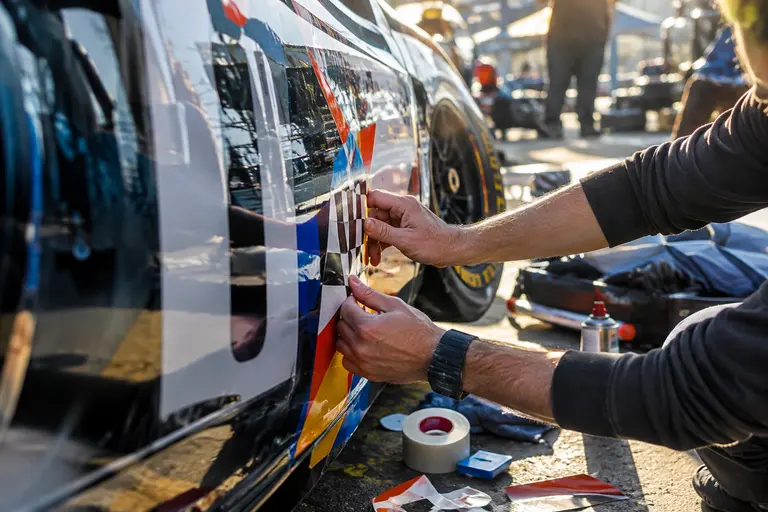
Article 21 of the 2026 IMSA regulations covers driver and crew attire, competitor uniforms, and required identification items. The public redline version notes that mandatory decals and patches must be displayed on fire suits and uniforms, and cars must carry correct number panels, illuminated panels when required, leader lights, and decals as directed by the Series Supplementary Regulations. Noncompliance can result in ineligibility for championship points or prize money, as shown in the 2026 public IMSA regulation publication.
Uniform Presentation Is Part Of Team Prep
For grassroots racers watching IMSA teams, the lesson is not simply that professional uniforms look organized. The bigger lesson is that presentation, identification, and compliance are connected. A missing patch or wrong panel can create consequences beyond appearance. That is why IMSA gear essentials include a visual inspection of suits, crew uniforms, and car markings before travel.
Use one folder for images of the required placements, then have a crew member compare the physical gear against that reference. Keep spare approved patches and attachment supplies where the gear manager can reach them. The goal is not to turn the paddock into an office. The goal is to protect the effort that drivers, mechanics, families, and sponsors have already invested.
A Shared Checklist Reduces Pressure
A practical pre-event checklist can stay short and still cover the core items:
- Confirm suit, underwear, gloves, balaclava, socks, and shoes meet the accepted FIA or SFI standard.
- Verify helmet standard, expiration status, full-face design, and required removal system.
- Match each refueling role to the correct outerwear, base layers, gloves, shoes, balaclava, and full-face helmet.
- Check patches, decals, number panels, illuminated panels when required, leader lights, and team identification items.
- Review cooling equipment and remove any prohibited system before loading.
For readers who follow sports and community coverage across the same publishing network, we recommend visiting Ambikapur City to explore related topics where preparation and local support are part of the broader discussion.
Building A Team Routine Around IMSA Gear Essentials
The best IMSA gear essentials plan is built around people, not just products. A driver needs equipment that meets the rulebook. A crew needs clear assignments. Family members and supporters need jobs that fit their time, skill, and comfort level. When everyone understands the plan, the whole team becomes calmer and more useful on race day.
Start with a gear audit at home. Lay out every driver item, then every crew item. Photograph labels. Check dates. Try on the full kit. Sit in the car with the helmet, gloves, balaclava, shoes, and communication gear. Then repeat the same process for anyone assigned to fuel transfer. If something fails the check, replace or resolve it before travel plans tighten.
Race programs are built on sacrifice: late nights, shared meals, long drives, and budgets that have to stretch. Treating safety gear as a shared responsibility honors that sacrifice. It protects the athlete, respects the crew, and helps the paddock culture stay accountable. Under the active 2026 IMSA rules, good preparation is not about owning the most expensive kit. It is about knowing what is required, caring for it, and making sure the right person has the right equipment before the pressure rises.