

Josh Berry’s 2027 move to Legacy Motor Club gives amateur racers a useful way to think about racing responsibilities without pretending we know details that have not been publicly shared. Legacy Motor Club announced on September 8, 2026, that Berry, then 35, would drive its No. 42 Toyota Camry XSE in the 2027 NASCAR Cup Series season, replacing John Hunter Nemechek after 2026 Legacy Motor Club announcement.
As of October 24, 2026, the move had been announced, but the 2027 season had not yet started. That timing matters. Berry was not already racing the No. 42 for Legacy; he was preparing for a future Cup Series role while finishing his 2026 work with Wood Brothers Racing. For racers at the club, karting, motocross, or late-model level, that gap between announcement and first race is where the real life work sits: travel planning, shop time, family calendars, budget talks, fitness, recovery, and mental reset.
Direct public reporting reviewed for this topic did not include Berry explaining his personal family setup or giving detailed comments about balancing home life with this transition. So the responsible lesson is not to invent a private story. The better lesson is to look at what is verified about the career change, then apply it carefully to the everyday pressures amateur racers and their families know well.
What Racing Responsibilities Mean In Berry’s Move
Racing Responsibilities Start With A New Team
A Cup Series team change is not just a new number on the door. It means new people, new procedures, new communication habits, and new expectations. Legacy Motor Club stated that Berry would join Erik Jones in the No. 43 and Riley Herbst in the No. 84 as the organization fields three full-time Cup Series entries in 2027. That confirmed structure gives Berry a clear place inside a growing team program, but it also points to the human side of performance: the driver has to build trust with a fresh crew, learn how the organization works, and fit into a shared competitive plan.
For an amateur racer, racing responsibilities may look smaller on paper but feel just as personal. A rider changing classes, joining a new club, moving from practice days to race weekends, or switching from a family-built machine to a team-supported program faces similar questions. Who loads the trailer? Who tracks tire wear? Who handles meals, lodging, entry forms, and the parts bin? A career move at the Cup level reminds the grassroots community that racing is never one person acting alone.
Momentum Can Change The Weekly Routine
Berry’s move also came during a season with a mixed public record. Motorsport.com reported that at the time of the announcement, he had six straight top-10 finishes in 2026, a first for Wood Brothers Racing since 1976, after a difficult earlier stretch in the season Motorsport.com report. That kind of contrast is familiar across racing: the same season can include frustration, repair work, improved pace, and new opportunity.
Momentum brings its own pressure. Better results can mean more interviews, more sponsor attention, tighter preparation, and higher expectations from the people around the program. For families and helpers, that is where calendars can get stressed. A racer may need more simulator time, more setup notes, more gym work, or more quiet time after travel. The outside world sees the finish order. The people closest to the racer see the laundry, the late meals, the missed gatherings, and the emotional cost of trying to keep standards high.
Family Balance Without Guesswork
What Public Reporting Does Not Say
It would be easy to turn Berry’s transition into a personal family story, but the available reporting does not support that. The sources reviewed did not include direct, verified comments from Berry about children, a partner, household routines, or how his private life is arranged around NASCAR travel. That absence should shape how we write and talk about him. Respecting the line between public career facts and private life is part of being a healthy motorsports community.
That same standard helps amateur racers. Nobody at the local track owes the paddock a full account of what is happening at home. A rider may be caring for a parent, raising kids, working nights, studying, or trying to keep a small business afloat. Some responsibilities are visible in the pit area; many are not. Good racing culture leaves room for people to compete hard without demanding access to every private detail.
Why The Home Circle Still Matters
Even without private details about Berry, racing responsibilities clearly extend beyond race-day performance. Any driver moving between full-time Cup Series teams has professional duties that affect time, travel, recovery, and planning. For amateurs, the same principle lands in a practical way: the home circle often carries the weight that makes the racing possible.
A spouse, parent, sibling, friend, or crew volunteer might be the person who notices when the racer is too tired to make a good setup decision. They might be the one who keeps receipts organized, reminds the rider to eat, or tells the team that it is time to stop chasing one more change at midnight. That kind of support is not soft. It protects performance by protecting the person inside the helmet.
We have seen the same theme in other team-change conversations around Legacy Motor Club. For readers who want a related look at the mental side of roster movement, our piece on the Legacy roster shift connects team change with reset habits, trust, and pressure management. The common thread is simple: change asks more from everyone, not only the athlete.
Practical Support For Amateur Racers
Turn The Big-Team Lesson Into A Small-Team Plan
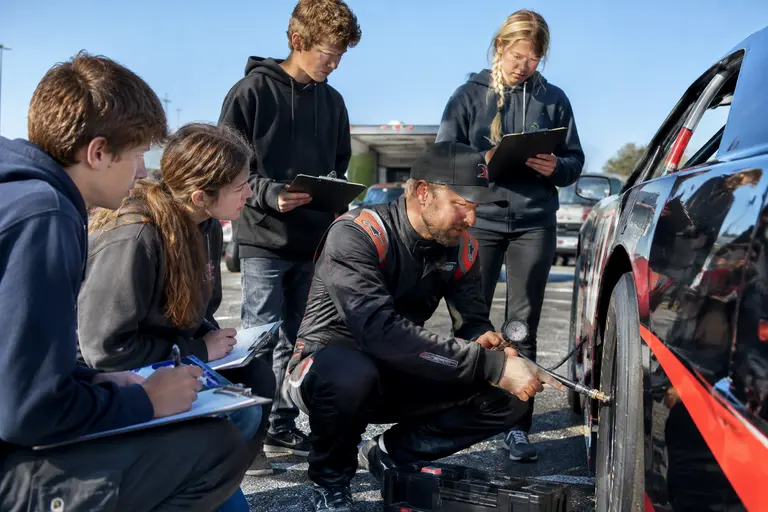
In amateur garages, racing responsibilities become manageable when they are named before the weekend starts. Too many families wait until Friday night to decide who is packing fuel, checking the transponder, confirming the route, or charging radios. That creates friction before the racer even sees the track. Berry’s move to Legacy is a Cup-level story, but it points toward a club-level habit: define the job before pressure hits.
A family racing plan does not need to be fancy. It needs to be honest. If the racer has a full-time job, young kids, school, or caregiving duties, then the plan has to respect those limits. A race program built on exhausted people will eventually show cracks. Better to race fewer events well than turn every weekend into a household argument.
- Set a weekly cutoff: Pick a night when race prep stops unless there is a safety issue. This protects sleep and family time.
- Assign one owner per task: One person handles entry forms, one handles tools, one handles food, and one handles the machine checklist.
- Keep a post-race reset: Before discussing mistakes, unload, hydrate, eat, and let emotions cool.
- Separate support from criticism: Families can help by asking what the racer needs before giving setup or riding advice.
- Track costs in plain language: Tires, fuel, parts, lodging, and entry fees should be visible to everyone affected by the budget.
Community Can Carry The Load
No racer should treat family support as an endless resource. Friends, club members, and nearby teams can help spread the work. Borrowing a stand, sharing a canopy, carpooling, or swapping setup notes can reduce pressure at home. That is why community matters in motorsports: the paddock can either drain people or help them stay in the sport longer.
For fans wanting to explore more about motorsports culture, SCAR Sports offers insights into racing culture and the people surrounding it. This resource covers the dual aspects of the sport: the high-stakes competition and the quieter support systems that ensure athlete preparedness.
The amateur racer can take one grounded lesson from Berry’s move: a transition is not only about ambition. It is about systems. If the people around the racer understand the plan, the pressure becomes shared in a healthier way. If they do not, even a good opportunity can feel heavier than it needs to be.
Josh Berry Racing Responsibilities For Club Racers
Josh Berry’s announced move to Legacy Motor Club on September 8, 2026, is a professional NASCAR story, but it also speaks to club racers, track-day riders, and families who build their weeks around engines, travel, and hope. The verified facts show a driver changing teams for 2027 after a demanding 2026 season. The unsupported details about private family life should remain private.
That boundary makes the lesson stronger. Racing responsibilities are not about copying a Cup driver’s life. They are about building a support system that fits your own. If you race, ask what your family needs from the schedule. If you support a racer, ask what task would reduce stress the most. If you are part of a club, make room for the newcomer who is trying to balance work, home, and competition. That is how motorsports keeps people involved after the first burst of excitement fades.