

Mental resilience strategies can sound abstract until you see them in a racer’s weekly routine. William Byron’s 2026 in-season approach gives amateur racers a practical model: protect mobility, recover with intent, prepare for heat, and keep the mind from dragging one bad result into the next race week. For riders balancing work, family, garage nights, and entry fees, that kind of discipline is not just elite-athlete talk. It is how a racer stays clear enough to make better choices before, during, and after competition.
Byron’s plan is useful because it connects body care with decision-making. During the NASCAR season, he shifted away from heavy barbell work and toward dumbbells, kettlebells, band work, shoulder and upper-back mobility, and core stability. He also trains about three times per week during the season, with Monday focused on recovery and more rest added as travel and heat fatigue build. Those details, reported by Muscle & Fitness, point to a lesson that fits club racing as much as stock cars: the best plan is the one that keeps you sharp for the next start.
Mental Resilience Strategies Begin With Mobility
Mobility is often treated like warm-up filler, but Byron’s approach frames it as energy management. In a race car, he is dealing with heat, vibration, G-forces, and long periods of concentration. On a motorcycle, amateur riders face their own version of that load: bracing under braking, holding body position, absorbing bumps, and staying relaxed enough to feel grip changes. If your shoulders, upper back, hips, or core are locked up, the body burns energy fighting itself before the race even asks its hardest questions.
Mental Resilience Strategies In The Garage
The garage is where many amateur racers either protect their weekend or spend it before it starts. A simple mobility block after bike prep can change the tone of race day. Think band pull-aparts, thoracic rotations, hip openers, light kettlebell carries, and controlled core work. None of that needs to look dramatic. The value is in helping the rider feel less trapped in their own body when tension rises.
This is where mental resilience strategies become a maintenance habit, not a slogan. If you already check tire pressures, torque critical fasteners, and inspect brake pads, it makes sense to check the rider too. A tight neck, poor sleep, or a skipped meal can affect focus just as surely as a worn control cable can affect feel. The racer who treats personal readiness like bike readiness tends to show up with fewer avoidable problems.
Why Less Heavy Work Can Make Sense In Season
Byron’s reduced emphasis on heavy barbell lifting during the season is not a rejection of strength. It is a timing decision. Heavy strength work can be valuable in an offseason build, but competition periods demand freshness, coordination, and recovery capacity. For riders, that can mean saving hard gym days for gaps in the calendar and using race weeks for movement quality, light strength, and mobility that supports time on the bike.
The practical test is simple: does a workout help the next session, or does it leave you sore, flat, and mentally irritated? Amateur racers do not always have the luxury of full-time recovery. Many leave the track and go straight back to jobs, families, and shop bills. That reality makes smart training restraint part of race craft.
Recovery Turns Fitness Into Race-Day Control
Recovery is not passive. Byron’s routine after races starts with fluids and electrolytes, then simple sugars such as fruit, with protein emphasized the next day for repair. He also tracks sleep and pays attention to disruptions such as overheating. Those habits are basic in the best sense: repeatable, affordable, and easy to adapt for riders who do not have a professional support staff.
For club racers, the recovery window often starts in the paddock while the bike is still ticking hot on the stands. A rider who cools down, rehydrates, eats something simple, and gets out of the sun for a few minutes may be better prepared to review the race without spiraling into frustration. That matters after a mistake, a poor start, or a setup call that missed the mark.
Heat Preparation Without Hero Moves
Byron uses saunas, hot-condition training, and exposure to heat inside the car as adaptation tools. The research notes state that the interior of the car can often be about 40 degrees Fahrenheit hotter than outside air. The mental side is direct: heat can trigger panic-like reactions that make fatigue feel worse. Training for heat, then pairing that stress with recovery, helps reduce the shock of those conditions.
Motorcycle racers know the same feeling in a different suit. A hot day, full leathers, grid delay, and rising heart rate can make the first laps feel chaotic. Riders should be careful and use heat exposure in a controlled way, especially if they have medical concerns. Still, the principle holds: prepare for the environment before it surprises you. Shade, cooling towels, planned fluids, electrolytes, and calm breathing can be just as meaningful as another suspension click.
Sleep Is Part Of The Setup Sheet
Sleep is easy to sacrifice during a race weekend. Late-night repairs, early tech inspection, and long drives can turn rest into whatever is left over. Byron’s habit of monitoring sleep disruptions is a useful reminder that recovery is data. You do not need a perfect device or a lab. A notebook entry on sleep quality, heat, mood, soreness, and focus can help identify patterns over several weekends.
If a rider keeps fading late in races, the answer may not be only cardio. It may be hydration timing, poor sleep, heat buildup, or mental fatigue from trying to manage too many tasks alone. Recovery notes make those patterns visible and give the rider’s support crew something useful to act on.
Mindset Work Belongs Beside The Tool Cart
Byron works with a sports psychologist on pressure, anxiety, confidence, and the habit of dwelling on past results. One of the most useful ideas from his approach is leaving the prior race behind before preparing for the next one. That does not mean ignoring mistakes. It means reviewing them, learning what can be learned, and refusing to let them become the emotional soundtrack for the next event.
A 2025 systematic review and meta-analysis of elite athletes found psychological skills training was associated with improved mental well-being, with a standardized mean difference of 0.78 and a 95% confidence interval of 0.24 to 1.32; positive psychology interventions also showed benefit, with an SMD of 0.58 and a 95% confidence interval of 0.31 to 0.85, according to PubMed. That supports what many paddock veterans already feel: mental skills are trainable, and they belong in the plan before a crisis hits.
Reset Language After A Bad Session
One of the most useful habits for riders is choosing reset language before the weekend starts. After a crash, missed braking marker, or poor qualifying run, the brain reaches for harsh labels. Replace them with process cues: “check the bike,” “find the cause,” “breathe before feedback,” and “one change at a time.” This keeps the rider from turning a single mistake into an identity problem.
Byron’s principle of not fighting what does not need to be fought fits here. Amateur racers waste energy arguing with weather, track traffic, red flags, and other facts that cannot be changed. Save that energy for controllable items: body position, hydration, tire notes, visual focus, and the next clean lap.
For readers who want another racer-focused mindset angle, our piece on Allgaier mental resilience looks at support habits and race-day resets through a similar performance lens.
Community Support Makes Recovery Stick
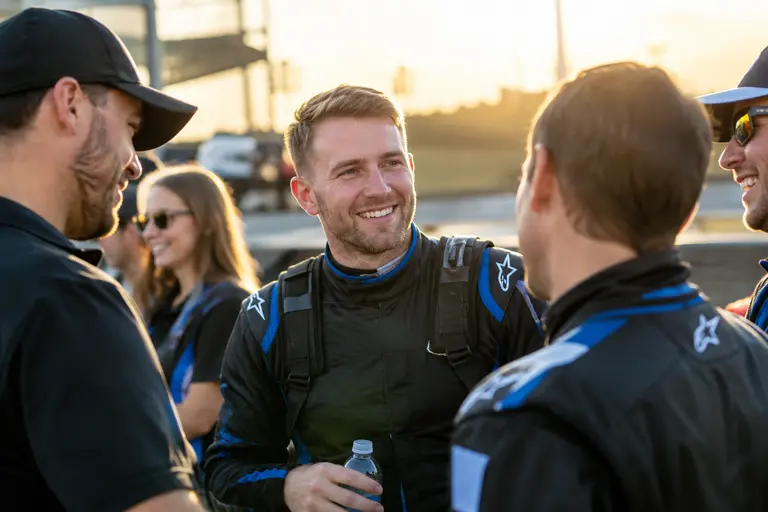
Racing looks individual from the grandstand, but most amateur programs survive because friends and family keep showing up. They drive the truck, hold the umbrella, cook food, take tire notes, watch body language, and remind the rider to drink water before the next call. That support can make mental resilience strategies easier to repeat because the burden is shared.
A rider should not expect the crew to read their mind. Before the weekend, decide who handles what: one person tracks hydration, one watches schedule calls, one helps with tire warmers, and one keeps the rider from getting pulled into every paddock conversation. Clear roles prevent small stresses from stacking into a race-day blowup.
Building A Paddock That Protects Focus
The best paddock culture is calm under pressure. That does not mean silent or serious all day. It means feedback is useful, timing is respected, and the rider has space after a hard session. A crew member can ask, “Do you want notes now or after you cool down?” That small question can prevent a defensive conversation and create room for better learning.
Community matters away from the track too. A racer who plays golf, cycles, coaches kids, or helps friends with their own projects often returns to racing with a healthier sense of identity. For readers who enjoy quieter competitive spaces outside the paddock, Copeland Hills Golf offers a perfect place for an off-track reset, reflecting this lifestyle balance.
William Byron Mental Resilience Strategies For Club Racers
The lesson from Byron is not that every amateur racer should copy a NASCAR driver’s exact schedule. The useful point is structure. His plan links mobility, core stability, heat preparation, post-race refueling, sleep awareness, and sports psychology into one performance system. Riders can apply the same pattern at a realistic scale.
Start with a weekly rhythm. Put mobility on the calendar just like bike prep. Keep hard training away from the most demanding race days. Add a real recovery block after events: fluids, electrolytes, simple food, cooling, and sleep. Review the weekend after your nervous system has settled, not while frustration is still driving the conversation.
Then make the mental side visible. Write down one cue for pressure, one cue for mistakes, and one cue for reset laps. Ask your crew to use the same language so the whole group is working from one plan. That is how mental resilience strategies become part of the racer lifestyle instead of something remembered only after a setback.
Amateur racing asks a lot from ordinary people with extraordinary commitment. Byron’s 2026 focus on mobility and recovery offers a grounded reminder: staying fast is not only about pushing harder. It is about knowing what to train, what to release, and who helps you stay steady enough to race well again.