
The Dollar Tree 301 at New Hampshire Motor Speedway took place on Sunday, August 23, 2026, so the best use of a New Hampshire NASCAR gear checklist now is as a race-day lesson bank. For fans, families, grassroots racers, and crew members who study Cup weekends for better habits, Loudon offered a clear reminder: the right equipment lowers stress, protects people, and keeps the focus on the racing community.
Good gear planning is not just about comfort. It affects how families manage long walks, how young racers learn discipline from national-series crews, and how weekend helpers balance race passion with real-world limits on time, money, and energy. A smart pack lets the day feel organized instead of rushed.
New Hampshire NASCAR Gear Lessons From Race Day
New Hampshire NASCAR Gear Starts With The Bag
That was the first New Hampshire NASCAR gear lesson from the August 23 event: bags and coolers needed to match the venue rules before anyone reached the grandstand. NHMS listed soft-sided coolers and clear bags up to 14″×14″×14″, and its event information also described the facility as cashless through the NHMS Know Before You Go page.
For race families, that size limit changes how the day is built. A soft cooler can handle drinks and snacks, but it cannot become a rolling parts bin. A clear bag speeds up personal organization because sunscreen, ear plugs, phone chargers, and small medical basics are easy to find. Backpacks no larger than 18″×18″×14″ were listed as allowed, while hard and foam coolers were prohibited, according to HappyHour Racing’s New Hampshire planning page.
Cashless Entry And Mobile Tickets
The cashless rule mattered for anyone used to handling race weekends with cash envelopes. A debit card, credit card, and charged phone were not luxury items; they were part of the kit. Mobile tickets also shifted preparation away from the gate and back to the driveway. Downloading tickets in advance, checking battery life, and keeping a backup power bank were practical steps that helped families avoid pressure at entry points.
This is where grassroots racers can learn from the spectator side. A sensible New Hampshire NASCAR gear plan is really a systems plan: pack the approved container, keep payment simple, and reduce decisions on site. The same principle applies in club racing, where a labeled tote or staged helmet bag can prevent a small miss from becoming a major distraction.
Comfort Gear That Protected The Day
Ear Protection And Sun Coverage
Cup-level stock cars produce intense sound, and the research notes for this piece strongly advised ear protection. That recommendation should apply to adults, kids, and anyone who spends long stretches near the racing surface. Foam plugs are easy to carry, but over-ear protection is often easier for children to manage because fit is visible. Families should treat hearing protection like a seat belt: simple, repeatable, and not optional once cars are active.
Sun gear also earned its space in the bag. Sunscreen, a hat, and sunglasses were listed among comfort and safety needs. These items do not make the car faster, but they help the people supporting the sport last through a long day. Heat, glare, and fatigue can wear down patience, and patience is one of the most valuable tools a racing family has.
Rain Layers And Walking Shoes
Layered clothing made sense at Loudon because the research notes described cooler mornings and evenings with hotter, humid afternoons possible. A poncho was the better rain choice because umbrellas were restricted in the grandstand rules described in the notes. The lesson is simple: pack flexible layers that can compress into an approved bag and come out fast when weather shifts.
Comfortable walking shoes also belonged near the top of the list. New Hampshire Motor Speedway sits on a large property, and the provided notes described the grounds as about 1,200 acres. That scale affects everyone: grandparents walking to seats, parents carrying supplies, and young fans trying to keep energy late in the day. The same packing discipline matters in other travel sports, and our network partner FSGolf offers insights into how golfers, similar to racers, can benefit from effective gear planning for long events.
- Best fan carry items: approved clear bag or soft cooler, ear protection, sunscreen, hat, sunglasses, phone charger, payment card, and rain poncho.
- Best clothing choices: layered shirt or light jacket, comfortable walking shoes, and weather-ready outerwear that fits inside the allowed bag size.
- Best family habit: assign one person to ticket and payment checks before leaving for the speedway.
Crew Gear Standards Worth Respecting
Restricted Areas Are Different
Spectator gear and crew gear live under different expectations. The research notes stated that garage and pit road credentials are series-specific and must be visibly worn inside restricted areas. They also stated that shoes, shirts, and pants are required in those zones, with open-toed shoes not permitted for staff or crew. For young racers watching from the outside, that is a useful lesson in professionalism: access carries responsibility.
That standard matters to the whole community. A driver’s path is supported by parents, volunteer mechanics, spotters, crew members, and track workers. Clear attire rules reduce confusion and help people respect working spaces where speed, fuel, tools, and traffic meet.
Pit Road Apparel Has A Safety Job
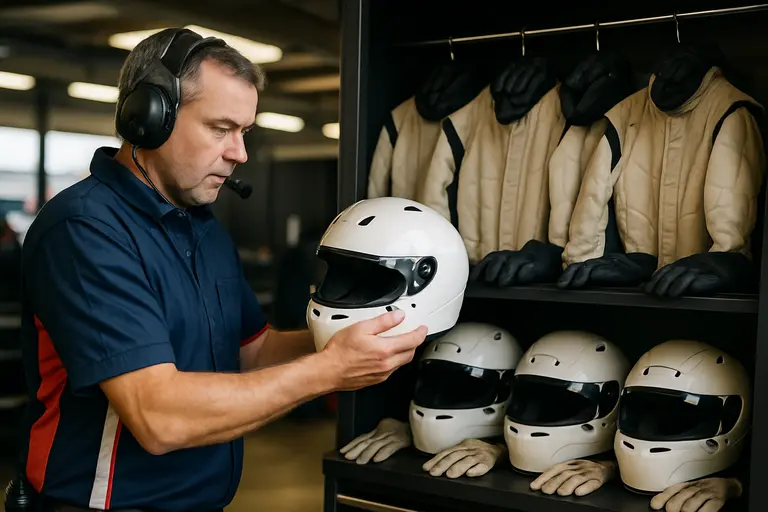
The provided research notes described NASCAR fire suits as SFI-approved and made from Nomex, with fire-resistant underwear, gloves, and footwear also required. They also described over-the-wall crew apparel needs, including flame-resistant suits, helmets, gloves, and protective underwear, with face-shield and flame-resistant head sock or skirt requirements during fueling operations.
None of that gear is decorative. It is job equipment. It protects workers and supports fast, repeatable routines during service. The notes also cited typical top Cup team pit stops under the Next Gen car at roughly 8 to 12 seconds, which puts fit and readiness into context. A loose glove, poor shoe choice, or misplaced helmet is not just uncomfortable; it can interfere with a crew member’s task.
Amateur racers can take the same mindset back to smaller paddocks. For a club racer, that may mean checking helmet date labels, replacing worn gloves, staging shoes and balaclava before loading, or making sure every helper knows what gear is personal protective equipment rather than casual clothing. For more shop-level thinking after a national race weekend, our Richmond bike prep lessons cover how pro observations can become better amateur routines.
- For crew culture: visible credentials, closed footwear for working roles, and flame-resistant gear help define safe work areas.
- For driver discipline: gear should be inspected before travel, not during a rushed pre-race window.
- For family teams: every helper should know which items are comfort gear and which items are safety gear.
New Hampshire NASCAR Gear Takeaways
The August 23, 2026 Cup race at Loudon showed that preparation is part of the racing lifestyle, whether someone sits in the grandstand, works in a restricted area, or learns from home for a future club event. The most useful New Hampshire NASCAR gear choices were not flashy. They were approved bags, hearing protection, weather layers, walking shoes, charged phones, payment cards, and safety apparel matched to the person’s role.
For racers and supporters, the deeper lesson is community care. Gear planning helps families save energy, keeps kids safer around loud race environments, and gives crew members the structure they need to work with confidence. That is what makes a race day sustainable after the hauler is loaded and everyone heads back to daily responsibilities.