
Good race day prep starts before the trailer door drops and the tire warmers, gauges, fuel cans, and radios come out. Joey Logano’s Cook Out 400 win at Richmond Raceway on August 15, 2026, gave racers a clean case study in how preparation turns into late-race execution. Logano used fresher tires to overtake Christopher Bell with 24 laps remaining, then held the lead to the finish, as reported by WBOC.
For amateur riders and club racers, the point is not that a stock car setup copies directly to a bike, kart, or local short-track machine. It does not. The useful lesson is process: read the surface, protect your equipment, plan your stops or service windows, and make sure every helper knows the job before pressure arrives. That is where a pro-level weekend starts to look manageable for a family crew, a small garage group, or a rider balancing work, school, and personal duties.
What Richmond Confirmed About Race Day Prep
Richmond rewarded the team that turned tire condition into usable speed at the right time. Speedway Media reported that Logano led 95 of 400 laps and won by 0.392 seconds over Chase Briscoe, a margin that shows how little room there was for wasted movement, poor pace judgment, or a sloppy final run Speedway Media race report. That narrow finish is useful for racers who do not have a Cup Series pit crew, because the same principle applies at smaller tracks: you do not need a huge mistake to lose a result. A small air-pressure miss, a late tool search, or a rider who pushes too hard too early can be enough.
Race Day Prep Starts With Tire Timing
Richmond’s abrasive surface made tire wear central to the race. Bell tried to keep position on older tires while Logano pitted later and used fresher rubber to close and pass. Good race day prep should treat tires as a plan, not a hope. For bikes, that may mean recording pressure changes across sessions, checking wear patterns after each run, and asking whether the rider is forcing the front, spinning the rear, or saving enough edge grip for the final laps.
For a grassroots crew, write down what happened instead of relying on memory. Track temperature, pressure, compound, suspension changes, and rider comments should live in one notebook or shared file. The rider’s feel matters, but feel gets sharper when it is paired with repeatable notes. If the surface is chewing tires, your best lap may not be the best sign of readiness. The stronger sign is whether pace stays calm and predictable after the tire has lost its first bite.
Pace Control After The Last Stop
Logano’s final segment worked because he had the tire advantage and then managed the lead under pressure. That second part matters. Fresh rubber can invite overdriving, especially for riders who feel the bike come alive and start chasing corner entry speed. A disciplined rider uses the extra grip where it pays: earlier throttle pickup, cleaner drive, and fewer corrections at exit.
For smaller teams, build a simple pace target. The rider should know whether the goal is to attack immediately, settle for two laps, or protect the tire until traffic clears. Crew members should use calm, short communication. Long radio calls, mixed signals, or emotional hand gestures can cloud the rider’s decision-making. Clear information supports clear hands and feet.
Tire Management And Pit Timing
Logano’s Richmond win showed the value of matching pit timing to track behavior. A stop is not only about taking service; it is about what the machine can do after service compared with what rivals can do before theirs. For riders, the same thinking applies to practice sessions and main events. If you know your tire falls off after a set number of laps, plan your push laps around that window rather than treating every lap as equal.
There is also a maintenance side. Tire readings do not stand alone. Brake feel, chain condition, cooling, suspension movement, and control free play all influence whether a rider can use the tire that is available. A fresh rear is less useful if the rider is fighting a dragging brake or a throttle tube that does not return cleanly. The pro lesson is not just strategy; it is that strategy needs a machine ready to accept it.
Make The Stop Boring
The best service stop feels plain because everyone has rehearsed it. Assign one person to tire pressure, one to fuel or charge needs if applicable, one to visual checks, and one to rider communication. If the crew is only two people, reduce the plan rather than asking both people to do everything at once. A shorter checklist completed well beats a long checklist half finished.
Before leaving for the track, pack by task. Tire tools in one bin, fluids in another, rider gear in another, and spares labeled clearly. Keep a written check before the first session and another after the last session. This lowers stress for the racer and protects the community around that racer from spending the day in panic mode.
Stage Strategy And Mental Reset
At Richmond, Logano placed third in Stage 1 and won Stage 2 before the final stage. That supported his track position and kept his team in the fight before the last tire call mattered. Amateur racers can borrow the structure even if their event has no NASCAR-style stages. Break the day into blocks: arrival, first session, adjustment window, heat race, main event, load-out. Each block needs a purpose.
Building Value Before The Final Run
Not every early session should be treated like a trophy run. A rider may need one session to confirm gearing, another to test braking markers, and another to judge tire wear. If the crew knows the purpose, feedback becomes cleaner. Instead of asking, “Were you fast?rdquo; ask, “Did the front hold the line after five laps?” or “Did the rear spin change as fuel burned off?”
This style of questioning helps the rider stay honest. It also keeps family and friends included in useful work rather than leaving them guessing. A supported rider is not only cheered for; the rider is surrounded by people who help make the next decision easier.
Using A Rough Patch Without Guesswork
The research notes show Logano had a rough stretch earlier in May 2026 with three straight finishes of 30th or worse, then later produced a stronger run of results that included top-10 finishes and wins. Without adding claims beyond that record, the racer takeaway is clear: poor results need review, not panic. A bad weekend can come from setup, execution, track fit, traffic, or simple race flow. The crew’s job is to separate what can be controlled from what cannot.
For a club racer, that review should happen after emotions settle. Look at tire notes, lap times if available, mechanical checks, and rider comments. Then choose one or two changes for the next outing. Too many changes at once can hide the real cause of the problem.
Community Preparation For Amateur Racers
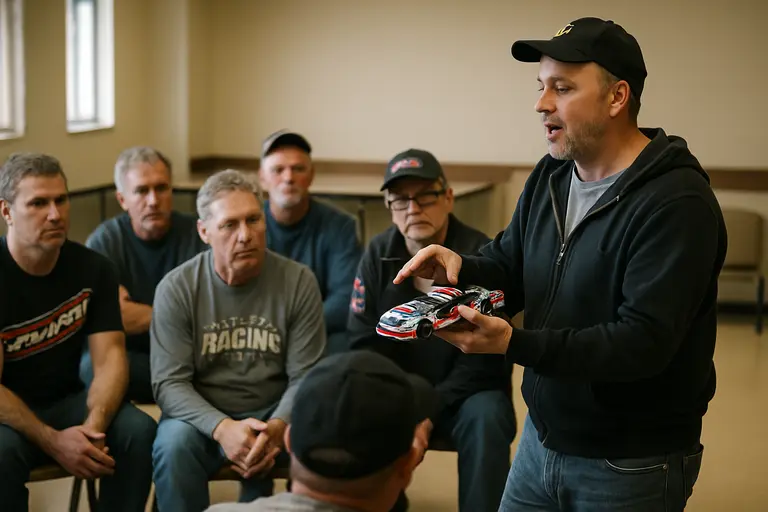
For amateur racers, race day prep is also community care. Most riders do not arrive with a paid staff. They arrive with parents, partners, siblings, friends, shop owners, or riding buddies who gave up a day to help. Respecting that support is part of performance. Clear schedules, realistic budgets, and shared expectations keep the sport healthier for everyone involved.
Assign Clear Roles Before Arrival
Role clarity protects relationships. A parent who handles food and hydration should not be blamed for a missing axle nut. A friend holding the pit board should know exactly what signals mean. A partner tracking session times should have the schedule before the morning rush. Small teams work best when each person has one job they can do well.
- Rider: Give short feedback, protect focus, and thank the crew after each session.
- Lead helper: Track the schedule, checklist, and next service task.
- Gear helper: Check helmet, gloves, boots, hydration, and backup items.
- Notes person: Record pressures, wear, setup changes, and rider comments.
Racers working from the Richmond example may also benefit from the related Richmond bike prep lessons, which connect tire, brake, cooling, and crew routines to amateur race weekends. Cross-sport readers interested in athlete development can discover additional insights at World Football Idol, a related site in the same network.
Keep Feedback Useful And Calm
After a tense session, the first words matter. Start with what the rider needs: water, shade, space, or a quick mechanical note. Then move to facts. “Rear pressure rose two pounds” is better than “You looked slow.” “You lost drive off Turn 4 after lap six” is better than a broad complaint. Calm feedback helps the rider reset and gives the crew a real action item.
This is where the racing lifestyle asks for balance. The same people who help in the pits may also share bills, family duties, travel time, and weekday stress. A clean plan shows respect for their effort. It also gives the rider more mental room to perform.
Joey Logano Richmond Lessons For Race Day
The practical race day prep message from Logano’s Richmond win is simple: late speed is built early. Tires, service timing, stage-by-stage goals, and crew communication all came together before the final pass and the narrow finish. Amateur racers can use that model without pretending they have Cup Series resources.
Start with what you can control. Prepare the machine so the tires can work. Plan the day so helpers know their roles. Use notes so setup choices are based on evidence. Give the rider calm information instead of noise. A race may still turn on traffic, weather, or a rival’s move, but a prepared team has a better chance to respond with discipline. That is the lasting lesson from Richmond: preparation is not one task. It is the shared habit that carries a racer from the first checklist to the last lap.