
Young talent development in motorsports is rarely built on speed alone. It grows through family support, steady coaching, school balance, honest feedback, and the patience to let a young racer mature one race weekend at a time. The available research for this topic does not include a direct Phillip Chapin quotation, so no comments are attributed to him here. Instead, the verified record around Matthew Chapin’s rise offers a grounded way to discuss what families and racing communities can learn from a young rider’s step-by-step progress.
Matthew Chapin’s 2024 MotoAmerica Junior Cup National Championship gave families in the paddock a clear example of how consistency can create opportunity. MotoAmerica reported that Chapin won six of the final eight races and finished 81 points ahead of the runner-up in the 2024 Junior Cup standings, a championship run detailed in its MotoAmerica profile. Those numbers matter, but the larger lesson is more personal: young racers need an environment where growth is measured by habits as much as results.
Young Talent Development Starts Close To Home
Building Trust Before Building Speed
For any young racer, trust comes before lap time. A rider has to trust the people helping with decisions, feedback, travel, rest, and pressure. Parents and mentors have to trust that the racer is learning from each outing, not simply chasing trophies. That balance is hard, especially when a teenager is competing while also living a student’s life.
Chapin’s case is useful because the research identifies him as 17 years old as of mid-2025 and a junior in high school. That detail matters for every racing family reading along. A young rider’s schedule is not only a racing schedule. It may also include classes, assignments, exams, family commitments, and the ordinary need to be a teenager. When people talk about talent, they sometimes skip the quiet work of staying organized. The school bag and the gear bag both matter.
Young Talent Development And School Rhythm
The healthiest version of young talent development leaves room for education and recovery. A student racer needs a rhythm that protects focus in both places. That can mean planning homework around travel weekends, communicating early with teachers, and keeping race review sessions short enough that the athlete can reset mentally. None of that guarantees a result, but it supports a steadier mindset.
This is where community support becomes practical. A racing club, a family crew, or a local mentor can reduce the feeling that one young person has to carry everything alone. The best support systems do not just ask, “How fast were you?” They also ask, “Did you eat? Did you sleep? What did you learn? What needs to feel calmer next time?” For a related community angle, our piece on racing clubs building champions shows how shared standards can shape young athletes away from the stopwatch, too.
What Chapin’s Step Up Shows
Results Open Doors, Preparation Keeps Them Open
Cycle News reported that Chapin recorded seven wins and nine podiums during his 2024 Junior Cup season, then moved to Vance & Hines Motorsports for the 2025 MotoAmerica Twins Cup aboard a Suzuki GSX-8R, as covered in this Cycle News report. That move showed a familiar truth in racing development: performance can earn attention, but the next level demands fresh learning.
A class change is not just a bigger line on a résumé. It asks a rider to adapt to a different motorcycle, different race rhythm, and different expectations. For families, that is a moment to reset the conversation. The question becomes less about repeating the prior season and more about building the skills needed for the new one. Young talent development works best when people allow a racer to be a learner again after a promotion.
Why The Next Class Can Feel Like A Reset
Every young racer eventually meets a weekend where old strengths are not enough. That does not mean the athlete has failed. It means the sport is asking for a wider skill set. A rider may need to improve race starts, tire feel, passing judgment, or communication with the crew. Families can help by treating those lessons as normal parts of progression rather than signs of panic.
For readers who track personal benchmarks in sport and life, the idea of building a personal standard connects well with a mindset of reaching personal bests. Racing families can borrow that mindset by measuring progress in repeatable behaviors: better notes after sessions, calmer debriefs, earlier packing, more consistent sleep, and clearer goals for practice.
Practical Habits For Families And Teams
Race Weekend Preparation That Teaches Ownership
Good preparation gives a young racer more than a clean bike and a packed trailer. It teaches ownership. The athlete should gradually understand what has to happen before the green flag: gear checks, hydration, schedule review, classwork planning, and mental reset time. Adults can still lead, but the racer benefits from being included in the process.
A simple race-week habit plan can help keep the pressure from spreading across the household:
- Before travel: confirm school responsibilities, gear, safety items, and basic schedule needs.
- At the track: keep feedback specific, short, and tied to what the rider can act on in the next session.
- After the race: separate emotion from review by allowing time to cool down before discussing details.
- Back home: record one strength, one lesson, and one practical change for the next event.
These habits are not dramatic, but they protect energy. They also help the young athlete learn that preparation is not punishment. It is part of respecting the people who make racing possible.
Feedback That Builds Resilience
Young racers hear a lot of voices. Some are helpful. Some are loud. The people closest to the athlete can make a major difference by keeping feedback respectful and direct. “You missed that apex twice” is more useful than “You were careless.” “Let’s review the start” is calmer than “You gave it away.” A young racer who feels safe enough to admit mistakes is more likely to learn from them.
That tone matters in young talent development because confidence and accountability have to grow together. Too much praise can blur the work still needed. Too much criticism can make a racer defensive. The middle ground is honest support: name the issue, connect it to a skill, and help the athlete build the next attempt.
Community Support Beyond The Podium
The Paddock As A Learning Space
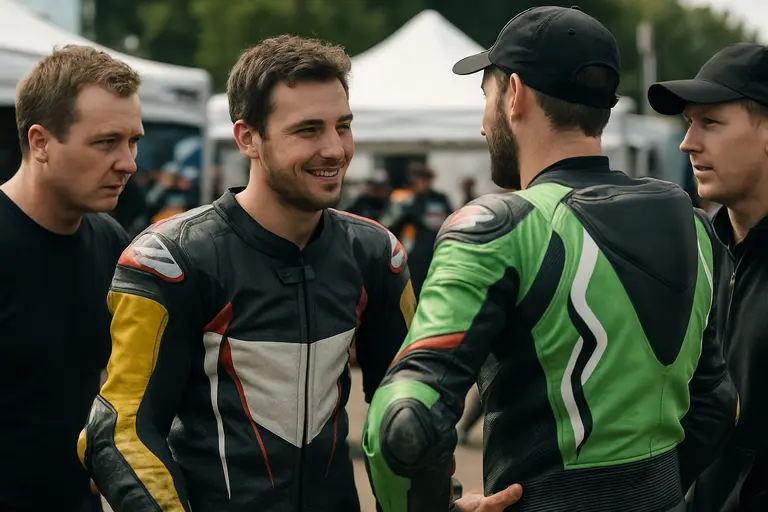
Racing communities often teach by example. Younger riders watch how older athletes respond after a poor session, how crews solve problems, and how families speak to one another when stress rises. That social education is part of the racing lifestyle. The paddock can become a place where patience, responsibility, and composure are learned in public.
Chapin’s 2024 title run will be remembered through wins and podiums, but families can draw a wider lesson from it. Consistency is not built in one weekend. It comes from repeated choices, many of them made away from the track. A teenager who is expected to race, study, travel, and mature needs support that is firm without being harsh.
Why Development Is A Shared Responsibility
No young racer develops alone. Even when the athlete is the one on the bike, the effort around them is shared. Families manage time and resources. Teams provide structure. Schools may help with communication. Local clubs create a place to practice belonging. That does not remove pressure from the athlete, but it spreads the responsibility in a healthier way.
The community impact is easy to overlook because trophies get the camera time. Yet a thoughtful development culture can influence many riders, not just the one standing on the podium. When a club rewards preparation, sportsmanship, and learning, younger racers see what the sport values. When adults model calm behavior after setbacks, teenagers learn that resilience is not a slogan. It is a habit.
Phillip Chapin And Young Talent Development
What Families Can Take From The Chapin Example
The topic of Phillip Chapin and young talent development should be handled with care because the supplied research does not verify a direct interview, quote, or specific development method from Phillip Chapin. What can be said with confidence is that the Chapin example, through Matthew’s documented 2024 Junior Cup championship and 2025 move to MotoAmerica Twins Cup, gives racing families a useful case study in staged growth.
The lesson for young talent development is not that every rider will follow the same path. They will not. Some will advance quickly, others will need more time, and many will define success in ways that never make national headlines. The stronger takeaway is that development should be steady, honest, and human. A young racer needs skill work, but also school support, rest, clear communication, and adults who can keep the sport joyful without ignoring the work.
That is how tomorrow’s racers are built: not by rushing them past childhood, and not by treating every weekend like a final exam. They grow when the people around them protect the full person inside the helmet. The Chapin record gives families a practical reminder that championships are public, but the habits behind them are often built in quiet conversations, shared travel days, and the steady belief that a young athlete can keep learning.