

Track setup adjustments are not just a pro paddock topic. They are part of how every racer learns to respect a circuit, protect equipment, and give the crew a clear plan before the next timed lap. The lesson from recent Formula 1 weekends is plain: the same car can need a very different balance depending on surface texture, corner speed, heat, bumps, and traffic.
For club racers, kart teams, dirt racers, and amateur road racers, the goal is not to copy a Formula 1 setup sheet. The goal is to think the same way: collect useful notes, connect those notes to driver feel, then make the smallest sensible change that solves the biggest problem. That approach keeps race day calmer for the athlete, the family members helping in the paddock, and the friends who gave up a weekend to run tools, fuel, food, or timing.
Track Setup Adjustments Start With Surface
Reading Texture Before Changing Parts
A circuit surface tells you what the car or bike will tolerate. Smooth asphalt may reward a different ride-height and tyre plan than a bumpy street circuit. A rougher surface can load the tyre in short, sharp bursts, while fresh or smooth tarmac may change grip as temperature builds. Before reaching for springs, bars, pressure changes, or wing angle, a racer should ask one question: what is the surface doing to the contact patch?
The 2026 Monaco Grand Prix, held June 1–4, showed the extreme version of that thinking. Teams used “Monaco-spec” wings with very high downforce and adjusted stiffness and ride heights for tight slow corners and bumpy, uneven streets, according to Raceteq’s Monaco setup analysis. They also accepted more aerodynamic drag because straight-line speed was less costly there than it would be at a high-speed circuit.
That does not mean a local racer needs a huge aero package for every slow track. It means the priorities shift. On a tight track, rotation, braking stability, traction off slow corners, and confidence over bumps may be worth more lap time than peak speed at the end of a straight. On a faster track, that trade can reverse. The winning habit is to name the trade before the wrench turns.
Track Setup Adjustments For Grip Windows
Tyres work in a narrow range, and surface temperature can move that range quickly. Even without factory sensors, a small team can still build a useful picture by logging ambient temperature, track temperature if available, pressure growth, wear pattern, and driver comments after every run. Good track setup adjustments come from those patterns, not from guesswork after one frustrating lap.
Ahead of the 2026 French Grand Prix at Circuit Paul Ricard, held May 19–22, Mercedes used LIDAR maps and simulator sweeps of wing level and aero balance while accounting for the smooth, newly resurfaced tarmac. Their engineering note explained that smoother asphalt can get much hotter and change grip evolution across a weekend, as detailed in Mercedes’ new-track preparation insight. The community lesson is practical: the track you meet in first practice may not be the track you race on later.
Building A Setup Notebook That Helps The Whole Crew
Turn Driver Feel Into Clear Notes
Many amateur teams lose time because the driver says “it is loose” or “it will not turn,” and the crew has to decode that in a hurry. Better notes separate entry, middle, and exit. A car that pushes on corner entry may need a different answer than one that pushes after throttle pickup. A bike that chatters under braking is telling a different story than one that runs wide under power.
A simple setup notebook gives everyone a shared language. It also reduces stress, which matters for racers balancing jobs, school, family time, and travel costs. The crew chief might be a parent, spouse, sibling, or friend. Clear notes protect those relationships because decisions feel less personal and more evidence-based.
- Session Conditions: Record date, time, air temperature, track condition, and whether the surface was green, rubbered-in, damp, or dirty.
- Driver Feedback: Break comments into braking, turn-in, mid-corner, exit, straight-line stability, and tyre feel.
- Setup Change: Write one change at a time where possible, including tyre pressure, ride height, gearing, wing, bar, spring, damping, or alignment changes.
- Result: Note lap consistency, tyre wear, confidence level, and whether the change helped in traffic as well as clean air.
This is where local racing communities shine. One racer may notice grip fading in the late afternoon. Another may spot a bump forming at corner exit. A crew member may see that a rival line avoids broken surface. Shared knowledge does not replace testing, but it can keep a team from wasting a session. For readers interested in broader sports contexts, the site Texas Sportsmen shares and promotes similar values of local expertise and camaraderie.
Practice Time Is A Setup Resource
Use Every Lap With A Purpose
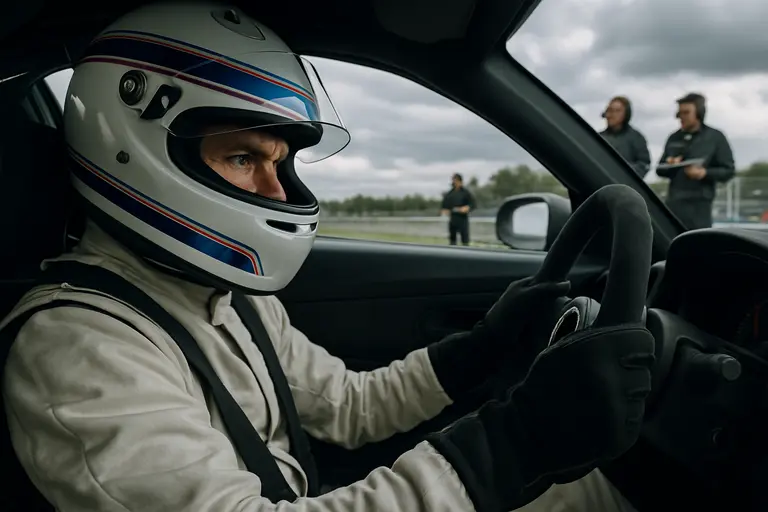
Practice is not free running; it is controlled learning. A longer practice window gives teams room to test tyre behavior, ride heights, balance, and traffic effects. The key is to avoid turning that extra time into random changes. Before rolling out, assign a purpose to each run: baseline, tyre read, balance check, long-run feel, traffic run, or qualifying trim.
The August 2026 New Hampshire weekend offered a useful reminder for stock-car teams because the Cup practice format expanded to a single 50-minute full-field session at most events, with an extra set of tyres noted in the research. Since August 23, 2026 has already passed, racers reviewing that weekend should treat it as a case study rather than an event to watch. The broader point still applies: more laps only help if the team knows what it is measuring. A related discussion of New Hampshire practice lessons connects that format change to tyres, traffic, and race-day readiness.
For amateur racers, the same thinking can fit a 10-minute practice or a full test day. If time is short, do not chase every complaint. Pick the issue that hurts confidence most. If the driver cannot brake consistently because the rear feels nervous, solve that before hunting for mid-corner rotation. If tyres are overheating late in a run, check pressures and driving inputs before making a large mechanical change.
Plan For Weather Without Panic
Weather planning is part of discipline. A damp line, falling temperature, or dark surface cooling late in the day can change grip quickly. The crew should decide before the session who watches radar, who checks pressures, who prepares visor tear-offs or rain gear, and who talks to the driver. That division of labor keeps the athlete from carrying every task alone.
Setup changes for wet or mixed conditions should match the racer’s skill and the class rules. Softer responses, safer brake balance, visibility preparation, and clear communication may matter more than aggressive speed. The best crews leave room for driver confidence. A racer who trusts the machine is more likely to bring it home, learn from the run, and keep the program healthy for the next event.
Track Setup Adjustments For Your Race Community
The best track setup adjustments are not the flashiest ones. They are the changes that fit the circuit, the conditions, the driver, and the people supporting the effort. Monaco and Paul Ricard showed how elite teams prepare around surface, heat, aero balance, and grip evolution. Grassroots teams can use the same habits at a smaller scale: observe first, change with purpose, record the result, and talk openly.
That process builds more than lap time. It builds trust in the paddock. It gives young racers a way to explain what they feel. It gives parents and volunteers a role that is organized rather than frantic. It helps experienced drivers pass useful knowledge to newcomers without pretending every track has one magic answer.
Before the next race on your calendar, walk the surface if rules allow, study past notes, prepare a short test plan, and agree on the first two changes you are willing to try. Leave space to adapt after the first run. Racing rewards speed, but it also rewards patience, honesty, and care for the machine. Those traits keep athletes moving forward and keep the community strong from one paddock weekend to the next.