
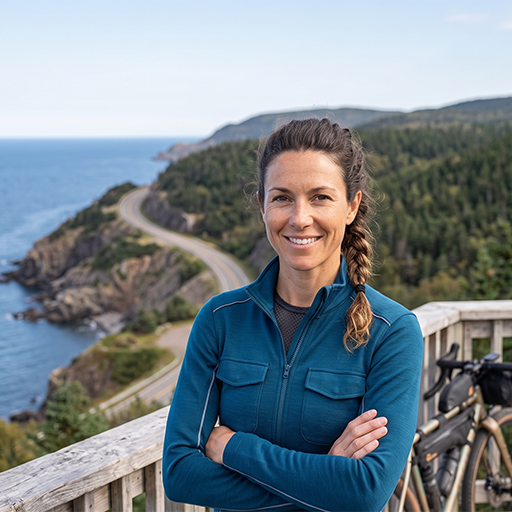
In the world of racing, psychology is key to success. Athletes often concentrate on physical training, but the mental aspect is just as important. This piece delves into how fear and doubt can affect racers, using Allie Burdick’s experience at the Columbia, Maryland Olympic distance triathlon as an example. She faced harsh conditions, showing the need for mental readiness.
Running is largely a mental game, yet many athletes neglect this critical aspect. Ultra-endurance runner Samantha Gash noted, “I think that I can do anything. If I really want to do it – I think that is the caveat.” This mindset can make all the difference. Challenges like self-doubt, anxiety, and negative self-talk can hold you back, but they can be overcome with the right strategies.
We will explore effective ways to boost your mindset and racing performance. Recognizing the power of belief is the first step to reaching your goals. For more on improving lap times, read this article.
Understanding Racing-Specific Fears
Racing brings forth unique fears that test even the most experienced athletes. These fears are real, rooted in the high-pressure environment of competition. Many racers engage in the “what if” game before a race. They worry about “What if the weather is awful?” or “What if I hit the wall?”. This cycle of anxiety can harm the athlete mindset and affect performance.
To effectively manage these fears, it’s vital to acknowledge them. Here are some common racing-specific fears:
| Fear | Description | Impact | Solution |
|---|---|---|---|
| Self-Doubt | Questioning one’s abilities and skills | Erodes confidence | Positive affirmations and practice |
| Fear of Failure | Anxiety about not meeting expectations | Creates hesitation | Set realistic goals |
| Performance Anxiety | Nervousness before or during a race | Tightens muscles, clouds judgment | Breathing techniques and visualization |
| Negative Self-Talk | Internal dialogue that reinforces limitations | Hinders motivation | Challenge negative thoughts |
These fears, though natural, can be overwhelming if not addressed. The critical insight is that uncertainty breeds fear. By preparing for each “what if” scenario with a realistic plan, racers can turn anxiety into a sense of control. Understanding these fears is the first step towards mastering them, leading to effective mindset techniques discussed next.
Visualization and Mindset Techniques
To conquer racing anxiety, athletes often turn to visualization and mindset strategies. Visualization is a potent method for mentally practicing races. It involves imagining oneself triumphantly crossing the finish line. Yet, it’s critical to remember that relying only on visualization can create a false sense of security.
Allie Burdick stresses the importance of combining visualization with the “what if” game. This method prepares racers for unexpected challenges, like weather changes or equipment failures. By anticipating these scenarios, athletes can develop a more robust mental strategy to overcome hurdles.
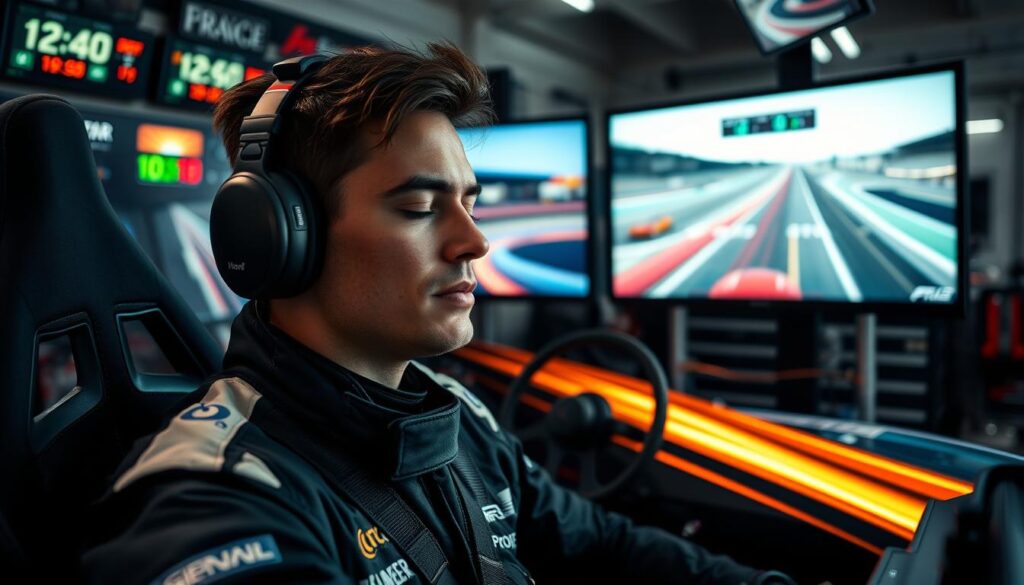
Positive self-talk is also vital for racers. Dr. Andrew Newberg and Mark Robert Walman’s research shows how language shapes our brain. They note that negative words can influence our mindset, even when used positively. So, racers should use affirmations that boost confidence, like “stronger with every step.”
Present-moment focus is another effective way to manage anxiety. By focusing on breathing, form, and pacing, racers can divert their attention from outcome-related thoughts. This approach helps maintain calm and control, enabling peak performance.
For more on overcoming negative thoughts, check out this resource. If you’re looking to improve your focus on race day, explore this article.
Professional Insights: Sports Psychologists Speak
Insights from sports psychologists highlight the role of mental strength in racing performance. Renowned motivational speaker Scott Welle stresses the need to condition the mind as one would the body. He believes mental preparation is key; a mindset cannot be conjured up on race day without prior practice. This is essential for racers aiming to reach their peak performance.
Dr. Stan Beecham, a well-known sports psychologist, emphasizes the importance of self-belief. He believes athletes must genuinely believe in their abilities. This belief is fundamental for effectively applying mental strategies. When racers trust in their capabilities, they are more likely to conquer fears and doubts.
Peak Performance Sports provides specialized mental training programs for racers. These programs tackle various psychological hurdles athletes encounter:
| Program Name | Focus Area | Key Benefits |
|---|---|---|
| The Confident Racer | Racing with conviction | Eliminates indecision and mental mistakes |
| Arm Pumped Solved | Relaxation techniques for motocross | Reduces tension and anxiety |
| The Fearless Athlete | Overcoming perfectionism | Helps to combat fear of failure |
| The Focused Athlete | Concentration improvement | Enhances mental clarity during races |
| The Composed Athlete | Emotional control | Regulates emotions under pressure |
These insights collectively show that racing psychology is a trainable skill set. By using structured methods, racers can systematically improve their mental toughness. This, in turn, enhances their performance on the track.
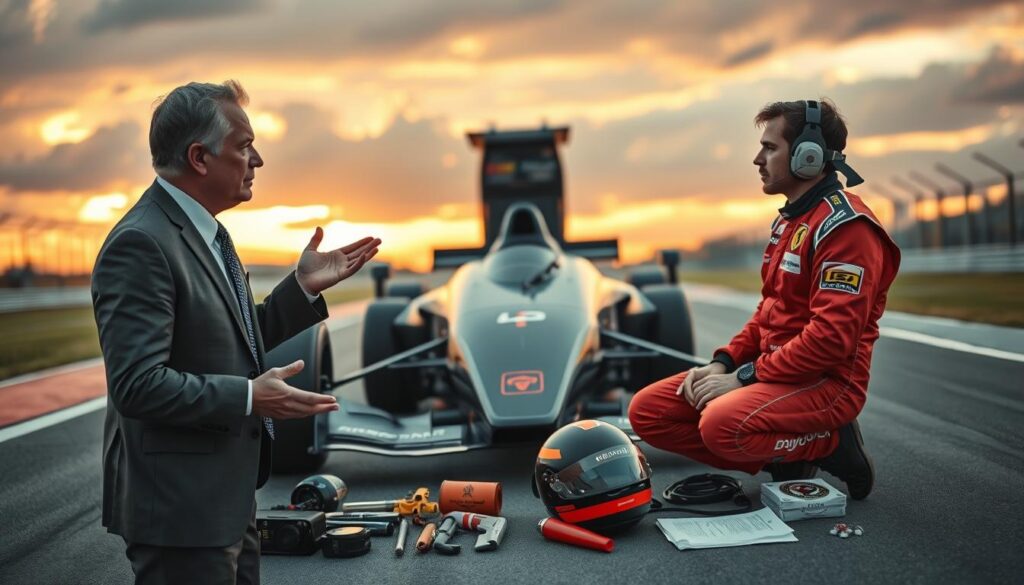
Personal Testimonies: Mental Comebacks
Racers often face their fears head-on, sharing remarkable mental comebacks. Allie Burdick, for instance, took on her first Olympic distance triathlon in Columbia, Maryland. She faced a biting 45-degree air, 61-degree water, and winds over 30 mph. Yet, she didn’t let the cold shake her. Instead, she pushed through and finished strong, earning an age-group placing. This shows how an athlete mindset can excel even in extreme conditions.
Samantha Gash’s story is equally inspiring. She ran 379 km nonstop across the Simpson Desert in Australia. Believing that mindset shapes capacity, her journey embodies resilience. Her determination to succeed in such harsh conditions highlights the human spirit’s strength.
Haile Gebrselassie’s 10,000-meter Olympic comeback in Sydney is legendary. He beat Paul Tergat by just 0.09 seconds, proving the mind can push the body beyond limits. His victory, achieved in the race’s final moments, showcases the power of focus and belief.
Sarah Russell’s story is also compelling. Despite being told she’d never run again due to medical issues, she raced the Himalayan 100 Mile. Racing with a colostomy bag, her tale reminds us that the athlete mindset can defy expectations and inspire others.
Perry Newburn’s journey from a 16-year heroin addiction to becoming an ultrarunner is a testament to transformation through perseverance. He now undertakes significant physical challenges, like running across the U.S. for charity. Perry’s story proves that mental comebacks are possible, no matter where you start.
These stories collectively show that the athlete mindset is built on belief, resilience, and the refusal to give up. They inspire others to overcome their own challenges.
Creating Your Own Mental Toolkit
Building a personal mental toolkit is key to overcoming anxiety in racing. Mental skills, like physical ones, need regular practice. To get ready for race day, create a routine that includes mental exercises. Use mantras and pep talks to condition your mind, making them effective when needed.
Adopt the A-B-C goal framework to stay motivated. Your A goal is the ideal outcome, like a podium finish. The B goal is a fallback, and the C goal ensures finishing is a success. This mindset helps you appreciate every race, win or lose.
Learn to have a short memory during races. Letting go of setbacks keeps your focus sharp. Haile Gebrselassie’s comeback shows the power of resilience. View discomfort as temporary, a necessary step for growth in endurance sports. Regularly facing challenges boosts your mental toughness.
Seek support from coaches, mentors, or sports psychologists for valuable insights and strategies. Their outside views can help you overcome mental barriers. Quality gear, like Sumarpo wetsuits, can also boost your confidence. This lets you focus fully on your race.
For more resources, check out breathing guides and Pilates exercises. They strengthen your body and calm your mind, fostering a holistic mental preparation. Learn more about overcoming anxiety in racing by visiting this resource.