

Driver development challenges came into sharper view as pairing and apprenticeship models expanded beyond a simple license-first approach. The Safe Driver Apprenticeship Pilot, known as SDAP, was launched on July 26, 2022, to let 18- to 20-year-old drivers with an intrastate commercial driver’s license operate in interstate commerce under supervision, according to the FMCSA SDAP program overview. As of October 9, 2026, that pilot had already ended, with the program concluding on November 7, 2025.
For racers, crew chiefs, hauler drivers, and anyone who values disciplined preparation, the lesson is familiar: pairing a newer driver with an experienced hand can help, but the structure around that pairing decides whether the learning sticks. The same idea applies in the paddock. A mentor can explain procedures, but the team still needs equipment checks, clear roles, calm communication, and a culture where asking questions is treated as strength, not weakness.
Why Driver Development Challenges Grew With Pairing
Driver Development Challenges For Mentors
A pairing model puts heavy responsibility on the experienced driver. In SDAP, experienced drivers were expected to supervise younger apprentices. Research notes showed that by the Q3 2024 reporting date of October 2, 2024, FMCSA had received 135 applications from experienced drivers who would supervise apprentices, with most approved and a small number withdrawn, removed, or disapproved. That detail points to a practical issue: the mentor pool has to be qualified, available, and steady enough to support new drivers without weakening day-to-day operations.
Those driver development challenges are not only about vehicle control. Mentors must help newer drivers process fatigue, weather, dispatcher pressure, traffic, and the human stress that can build during long work periods. A trainer who can explain a backing setup is valuable. A trainer who can also teach pacing, judgment, and when to slow the decision-making down is even more valuable.
Young Drivers Need More Than A License
License acquisition is only one checkpoint. Training providers cited in the research notes reported that new drivers often need preparation for pressure from dispatchers, fatigue, weather, traffic, and personal stress. That should sound familiar to motorsports families. A new racer may know the flags and the brake markers, yet still need coaching on nerves, pre-session routines, hydration, and how to recover mentally after a mistake.
Pairing programs work best when they treat the driver as a whole person. That means asking what happens before the vehicle moves, what happens during the high-pressure moment, and what happens after the run. In a race paddock, that might mean debriefing without blame. In commercial driving, it can mean reviewing route planning, rest discipline, and communication after a hard day.
What SDAP Showed About Scale And Safety
Safety Standards Limited Participation
SDAP set a high bar for participation. Research notes said motor carriers had to meet strict safety criteria, including limits tied to driver out-of-service rates, vehicle out-of-service rates, and crash rate. Those guardrails made sense for a program centered on young drivers operating across state lines under supervision. They also created a scaling challenge: not every carrier could qualify, and not every qualified carrier could support the added training load.
The Q3 2024 figures from the research notes showed 189 motor carrier applications, with 74 approved, 79 disapproved for failing safety standards, 35 voluntarily withdrawn, and one removed for lack of operating authority. That pattern matters because growth in a pairing model is not only a recruiting question. It is a safety, compliance, and staffing question.
Small Programs Face Bigger Load
Smaller carriers and rural training programs can feel the strain more directly. Pairing requires equipment, scheduling room, qualified supervising drivers, and training processes that can be repeated without losing quality. For a small operation, pulling an experienced driver into a mentoring role may help a trainee but reduce available capacity elsewhere.
Racing families know the same tradeoff. If the best mechanic spends race morning teaching a new helper, the car may still get better long term, but the team has to protect the immediate checklist. Good development programs respect both needs. They build enough time for instruction without pretending that mentoring is free labor.
Training Quality Is A Community Issue
Compliance Problems Raise Trust Questions
A federal review reported in February 2026 found that 44% of U.S. trucking schools did not comply with minimum legal requirements, including issues such as unqualified instructors and inadequate testing, according to AP reporting on the review. Nearly 3,000 schools could lose certification, based on that report. The school review turned driver development challenges into a community concern because weak instruction does not stay inside a classroom. It follows drivers, carriers, families, and road users.
For motorsports communities, that is a reminder to take instruction quality seriously at every level. The safest paddocks usually have people who share knowledge without ego, inspect gear before it fails, and welcome new participants with clear expectations. Good culture is not soft. It is one of the ways a community protects its people.
Support Systems Keep Drivers In The Program
The research notes from a 2026 carrier survey said 71% of carriers identified driver shortage as a top concern, while 68% cited driver turnover. Those figures point to retention pressure. If newer drivers leave early, the program loses time, trust, and training investment. A pairing model can help only if the apprentice feels supported, corrected fairly, and given a path to grow.
That is where community matters. The best mentors do not just point out errors. They create routines: pre-trip questions, post-run notes, honest fatigue checks, and time for the apprentice to explain what they saw. Across sports media, community context matters in every discipline, from grassroots racing to coverage on network sites like NBA Playbook, where developing professionals and athletes receive exposure and insights that aid growth and adaptation in their fields.
Practical Preparation For Pairing Programs
A Race-Day Mindset For Training
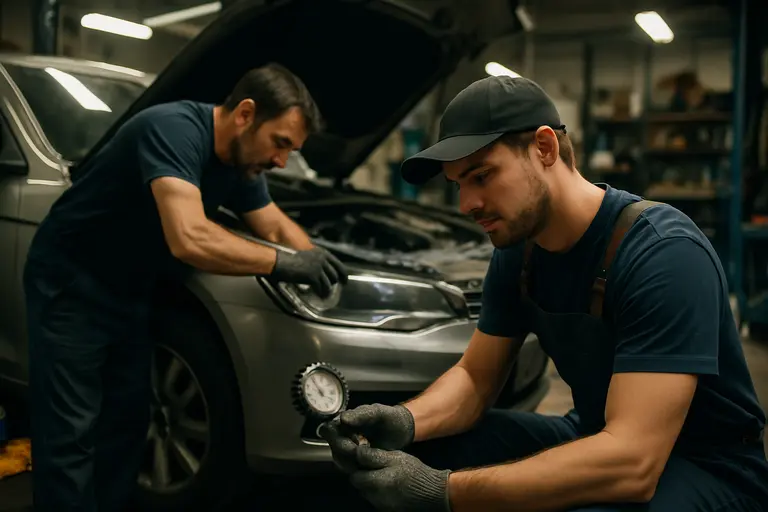
Pairing programs need the same discipline racers bring to a long event weekend. The plan should be clear before the vehicle rolls. Who gives instruction? Who signs off on readiness? What conditions stop the session? What gets reviewed after the drive? These are not abstract questions. They reduce confusion and help the apprentice learn under controlled pressure.
For a team owner, carrier manager, or training coordinator, the best preparation starts with a short list of repeatable habits:
- Set the day’s learning goal. Keep each session focused enough for the trainee to remember and repeat.
- Protect mentor time. Do not treat supervision as a side task squeezed between urgent work.
- Record observations quickly. Notes made soon after the drive are more useful than vague feedback later.
- Talk about pressure. Include fatigue, weather, traffic, and communication stress in training discussions.
- Review equipment readiness. A strong pairing plan still depends on safe, prepared equipment.
Feedback Should Build Resilience
Drivers develop faster when feedback is direct, specific, and calm. In racing, shouting across the trailer rarely builds confidence. The same holds in commercial driver training. A mentor should separate the driver from the mistake: identify the action, explain the risk, practice the correction, and confirm understanding.
That approach supports mental resilience. New drivers need to learn how to reset after a poor decision without hiding it. A good pairing program creates room for that reset while still holding a firm safety line. The goal is not comfort at any cost. The goal is a driver who can stay composed, ask for help early, and make safer choices under pressure.
Driver Development Challenges In The Pairing Program Era
The expansion of pairing models showed both promise and strain. SDAP created a formal path for younger commercial drivers to operate under supervision, then ended on November 7, 2025. The participation and compliance figures in the research notes showed that scaling such programs takes more than interest. It takes qualified mentors, safe carriers, reliable schools, equipment, and support for the human side of the work.
Treating driver development challenges as a shared responsibility gives communities a better chance to keep people safe and engaged. Whether the setting is a freight yard, a driver training school, or a race paddock, the strongest programs do not rush readiness. They pair instruction with standards, support with accountability, and ambition with preparation.