

The Veterans Race at Virginia International Raceway is scheduled for November 6–8, 2026, and its meaning reaches well beyond lap times. The second annual CrowdStrike Veterans Race of Remembrance Powered by AWS is built around an 8-hour endurance format, a Remembrance Service, and the work of Operation Motorsport, which uses racing environments to support medically retiring and retired service members. For racers, crews, families, and volunteers, VIR becomes more than a venue; it becomes a shared workshop for purpose, discipline, and community care.
That matters because motorsport already runs on teamwork. A driver may be the person most visible at speed, but the race weekend depends on crew members, organizers, families, safety teams, and volunteers doing their jobs with focus. Operation Motorsport’s model fits that culture. Its stated focus is restoring team, identity, and purpose for medically retiring or retired service members through motorsport-based recovery opportunities, as described by Operation Motorsport. In a paddock, that support is not abstract. It shows up in assigned roles, shared schedules, controlled pressure, and the simple act of being needed by a team.
How Veterans Race Support Works At VIR
The structure at VIR gives the event its community value. The race is not only a ceremony wrapped around a competition, and it is not only a race with a charitable label attached. Based on the published event information, the November 6–8, 2026 schedule includes an open test day on Friday, practice and qualifying on Saturday, and the endurance race on Sunday at Virginia International Raceway, according to VIR’s event page. That three-day rhythm gives participants time to settle into roles, build trust, and experience the shared pace of a race weekend.
Why Veterans Race Format Matters
The Veterans Race format supports more than competition because endurance racing rewards consistency, communication, and calm execution. An 8-hour race asks teams to think about driver changes, equipment checks, fuel planning, weather awareness, and crew stamina. For beneficiaries embedded with teams, that setting can provide meaningful responsibility without needing to frame every moment as therapy. It is work, but work inside a supportive motorsports environment.
For a gear and preparation writer, that detail stands out. Race-day readiness is not only about the car. It includes radios that work, properly fitted safety gear, hydration planning, pit-lane awareness, and a clear schedule each participant can follow. Research notes state that Operation Motorsport and partner teams cover travel, lodging, meals, uniforms, and safety gear for eligible beneficiaries, removing out-of-pocket costs for those participants. That kind of support helps the focus stay where it should be: on safe participation, team connection, and a useful role inside the event.
Service Members Inside The Team Environment
Operation Motorsport’s Motorsport Immersion Program places medically retiring or medically released service members with service-connected disability into race-team environments. The research notes say applicants may be accepted up to 10 years after medical discharge, and that each beneficiary can be embedded with a team across a race season of 6 to 10 races. Those weekends can include travel, team uniform, and a 5- to 6-day commitment.
That level of structure is significant. Many amateur racers understand how much identity can form around a paddock role: the person who checks tire pressures, organizes tools, prepares food, manages radios, or keeps the driver calm before a session. For service members adjusting to life after military duty, a racing team can offer a familiar pattern of preparation, accountability, and shared responsibility, while still being separate from clinical care.
Race Week Preparation And Shared Responsibility
For teams taking part, the support mission should shape preparation before the transporter even rolls through the gate. That means making roles clear, checking that new crew members know where to be, and building enough margin into the schedule so no one is left guessing. The published 2026 structure includes Friday testing, Saturday practice and qualifying, and Sunday’s 8-hour endurance race. That layout gives teams a chance to introduce beneficiaries to the flow of the paddock before the longest day of competition.
The 2026 event also lists six classes: Sacrifice for prototype classes P1 and P2, plus Freedom, Valor, Remembrance, and Honor. Class structure matters because it helps teams understand where they fit on track and in the paddock. From a practical standpoint, clearly defined classes help reduce confusion during preparation, tech routines, and race planning. That clarity supports safety and makes the weekend easier for volunteers and new participants to absorb.
Practical Team Habits That Help
Teams can strengthen the community impact by treating inclusion as part of the race plan. That does not require a speech. It requires clear assignments, respectful communication, and a willingness to teach the basics without talking down to anyone. A beneficiary working in hospitality, public relations, technical support, or pit crew duties should know who their point person is, what the day’s timeline looks like, and when breaks are planned.
- Assign one crew contact: Give each new participant a known person for questions, schedule changes, and equipment needs.
- Explain safety boundaries early: Pit lane, hot areas, fueling zones, and radio procedures should be reviewed before pressure rises.
- Share the checklist: Let participants see how tire, fuel, hydration, and driver-change planning connect to the full race.
- Make the Remembrance Service part of the plan: The 2026 schedule includes a 30-minute mid-race Remembrance Service from 10:45 to 11:15 AM, so teams should account for that pause with care.
These habits are small, but they help a race team become a place where people can contribute with confidence. That is where the event’s purpose becomes visible in daily paddock behavior.
Remembrance Built Into Competition
The Remembrance Service gives the event a different tone from a standard endurance weekend. The research notes state that the 2026 race includes a 30-minute service during the race window. This is a meaningful design choice. It asks the paddock to make room for reflection inside a competitive setting, rather than separating remembrance from the sporting program.
For racers, that pause can be grounding. Motorsport tends to reward forward motion: fix the issue, make the session, get back on track. A scheduled remembrance moment reminds everyone why the event exists. It can also help families and supporters feel included. Not every person in the paddock turns a wrench or drives a stint, but many understand sacrifice, recovery, and the value of standing together at a set time.
The Veterans Race also creates a bridge between professional habits and grassroots community energy. Research notes say Operation Motorsport has been active across IMSA, SRO Motorsports America, and FEL Motorsports, with beneficiaries taking roles such as pit crew, hospitality, public relations, and technical work. Those roles show how broad motorsport participation can be. A person does not need to be behind the wheel to belong to the team.
Community Impact Beyond The Paddock
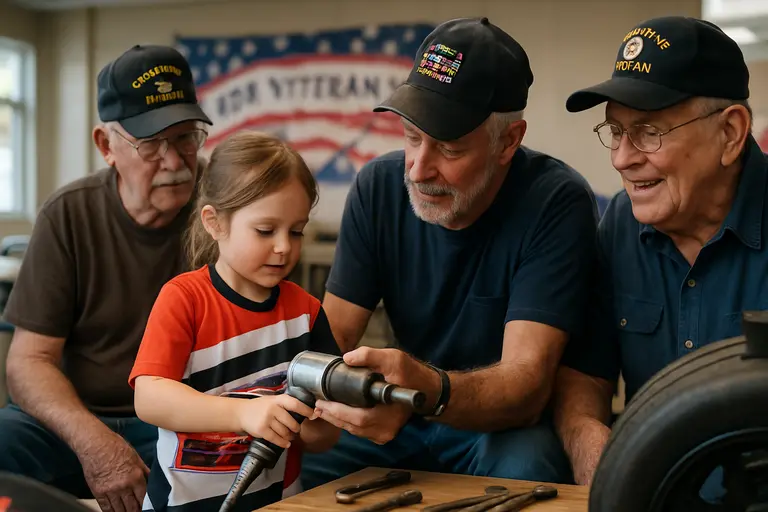
The strongest measure of an event like this is not only the race result. It is the number of people who leave VIR with a clearer sense of connection. In 2024, Operation Motorsport’s Motorsport Immersion Program delivered 97 recovery-focused activations across four professional racing series, with 23 veterans reconnecting with team, identity, and purpose, according to the research notes. The same notes cite more than 5,100 hours of immersive engagement and 480 days of structured participation supporting mental health and reintegration.
Those numbers give shape to the work, but the day-to-day effect still depends on people. A donor helps remove cost barriers. A team owner opens a garage space. A crew chief gives a clear job. A volunteer points someone to the right building. A family member offers steady support after a long day. In motorsport, community impact is often built from practical acts repeated under pressure.
For readers who follow community sports stories across our network, the related sports community coverage offers another place to see how athletic events can bring people together around service, identity, and shared support.
Why Supporters Matter On Race Weekend
The Veterans Race depends on supporters who understand that help must be useful, not performative. That means listening first, following the event schedule, respecting the roles assigned by Operation Motorsport and teams, and keeping the focus on beneficiaries rather than personal attention. In a paddock, the best support often looks ordinary: carrying water, checking a time sheet, helping a participant find the right meeting point, or giving someone space after an emotional moment.
This is also where families and local fans can feel part of the mission without needing insider credentials. Respectful presence matters. So does patience. Endurance events include long waits, weather changes, mechanical interruptions, and schedule pressure. A community that stays calm and helpful makes the experience better for racers, veterans, volunteers, and venue staff.
Veterans Race At VIR And Lasting Support
The Veterans Race at VIR is scheduled as a motorsport event, but its larger value sits in the support system around it. The 8-hour format, the class structure, the Remembrance Service, and the three-day schedule all create space for service members to take part in a team setting with real responsibility. That is where racing can do some of its best community work: not by promising instant change, but by giving people a place to prepare, contribute, remember, and be recognized.
For racers and crews, the message is direct. Preparation is part of respect. Clear roles, safe equipment, good communication, and attention to the Remembrance Service help protect the purpose of the weekend. For supporters, the task is just as clear: show up in ways that reduce friction and strengthen belonging. If the event succeeds on those terms, VIR will host more than an endurance race on November 6–8, 2026. It will host a paddock where competition and care share the same lane.