

Endurance Racing Insights can be most useful after a demanding race day has already tested every plan, routine, and support system. Katherine Legge’s May 24, 2026 attempt at racing’s “Double” put that idea in plain view: she planned to compete in both the Indianapolis 500 and NASCAR’s Coca-Cola 600 on the same day, a 1,100-mile challenge announced by NASCAR. By September 11, 2026, that effort is no longer a preview. It is a finished case study in preparation, pressure, fatigue, and how a racer keeps showing up after the day changes shape.
Endurance Racing Insights From Katherine Legge
The May 24, 2026 Double Attempt
Legge’s Double attempt carried a rare mix of scale and contrast. The Indianapolis 500 and Coca-Cola 600 ask different things from a driver: different cars, different traffic patterns, different pit rhythms, and different mental cues. The physical demand was clear, yet Legge emphasized in recent interviews that the mental shift between IndyCar and NASCAR could be even harder than the miles alone.
The final record of the day showed how quickly plans can change. Legge crashed out of the Indianapolis 500, then went on to drive the Coca-Cola 600 at Charlotte later that evening. She finished 31st, 12 laps down, and said afterward that the highlight would be finally being able to lie down because she was so tired, as reported by The Washington Post. That response was plain, human, and familiar to anyone who has packed up a trailer after a long day when the result did not match the work invested.
Why Her Endurance Background Mattered
Legge brought endurance racing experience into the attempt, including starts tied to events such as the 24 Hours of Le Mans, the 12 Hours of Sebring, and the Rolex 24. Those races teach drivers to work through fatigue, share responsibility, rest when possible, and accept that the car may not always be in their hands. For amateur racers and riders, that lesson travels well: the strongest preparation is not only about more seat time. It is also about learning how to recover between sessions, listen to crew feedback, and trust the people who keep the program moving.
For amateur racers, Endurance Racing Insights from Legge’s example are less about copying a professional schedule and more about building habits that survive stress. A club racer may not face 1,100 miles in one day, but they may face heat, traffic, a late-night repair, family travel pressure, or a restart after a mistake. The scale changes. The need for calm procedure does not.
Procedure Before Pressure
Build The Cockpit Routine
Legge has spoken about using simulation, testing, and lower-pressure practice to refresh procedures before major events. That includes learning buttons, cockpit routines, pit stop steps, and how the car feels before the stakes rise. The point is not to make race day free of surprises. Racing rarely offers that gift. The point is to remove as many small decision delays as possible.
One of her strongest preparation themes is that procedures need to feel automatic. She has described the need to build race-day tools into the body and mind so the driver is not wasting time consciously sorting through basic actions. That is a practical lesson for riders, kart racers, stock car drivers, and endurance teams alike. If a driver must search for a switch, think through a belt routine, or guess at a pit signal under pressure, the problem began before the green flag.
Train For The Heat And The Human Body
Legge’s preparation has included year-round conditioning, with work on upper-body strength, core strength, neck strength, running, CrossFit, and heat acclimatization. Those details matter because motorsports can punish the body in ways that are not always visible from the grandstands. Steering load, braking force, cockpit heat, noise, and long focus windows all pull from the same energy reserve.
For community racers, the takeaway is not to chase a professional routine without support. It is to treat fitness as part of safety and consistency. A modest, sustainable plan built with qualified guidance can help a racer stay sharper late in a stint, communicate better with crew, and make cleaner decisions when tired. Endurance Racing Insights are not only about heroic effort; they are about reducing avoidable strain before it becomes a mistake.
Mental Fortitude Is A Team Skill
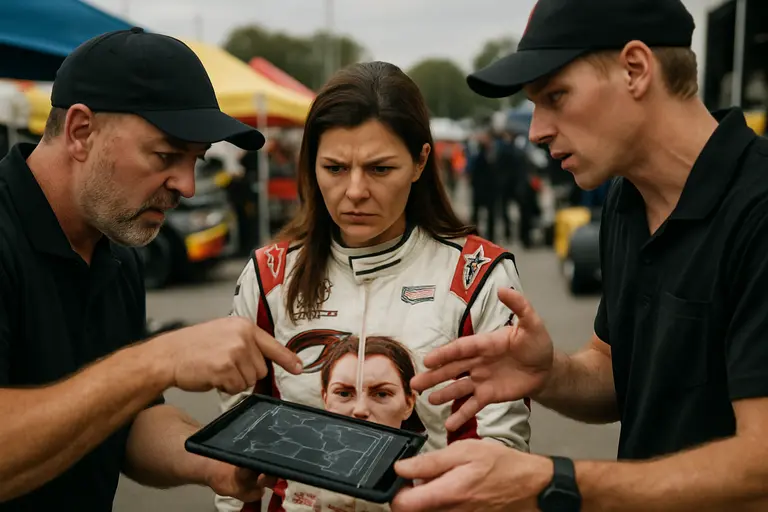
Endurance Racing Insights For Mental Reset
Legge has also worked with a mental coach, identified in one interview as Gloria, with focus areas that include emotional regulation, self-awareness, and training the subconscious to respond under stress. Her view is direct: conscious thought can slow a driver down on track. That does not mean racers should stop thinking. It means the thinking needs to happen in preparation so the response can be cleaner at speed.
Her 2024 Indianapolis 500 qualifying experience offers a useful example. During Bump Day pressure on May 19-20, 2024, she faced uncertainty and still focused on completing four clean laps, even when the car snapped loose. That kind of reset is not glamorous. It is quiet work: breathe, identify the next action, finish the lap, and avoid letting one moment take over the whole run.
That same idea connects with race day mindset lessons shared through other racer stories on Triplet Power Sports. Different athletes face different machinery and schedules, but the shared thread is clear: preparation gives racers a place to return when pressure rises.
Trust When You Are Not Driving
Endurance racing teaches a hard lesson for driven people: sometimes the best contribution is handing over control at the right time. Legge has noted that driver changes and sleep deprivation are part of that world. She has also acknowledged the challenge of trusting teammates when she is not at the wheel. That honesty matters because many racers, even at local levels, struggle to step back from every detail.
Strong teams make space for trust before race day. They talk through roles, confirm who handles fuel, tires, data, food, timing, and rest, then respect those roles when stress rises. Families and friends are part of that structure too. They may be the ones packing meals, driving the tow vehicle, calming a young racer after a mistake, or reminding an adult racer to rest instead of replaying every lap in the paddock.
For readers who see motorsports as part of a wider community sports culture, related community sports coverage can help connect racing stories with the broader ways athletes, families, and local supporters build belonging around competition.
Katherine Legge Race-Day Preparation
What Club Racers Can Apply
Legge’s 2026 Double attempt did not end with a storybook result, and that is part of its value. It showed preparation under strain, the emotional toll of a changed plan, and the discipline required to continue into another race after disappointment. For grassroots racers, that is often the real shape of the sport: a repaired part, a missed setup call, a long drive home, and a decision to keep learning.
- Practice the basics before stress: Rehearse belts, switches, radio checks, pit entry, and restart cues until they feel familiar.
- Build a reset phrase: Use a short cue after mistakes, such as “next corner” or “clean exit,” to bring attention back to the task.
- Train for the environment: Prepare for heat, fatigue, hydration, and recovery with qualified support when possible.
- Assign team roles early: Make sure family, crew, and friends know what help is useful and what can wait.
- Protect rest: Treat sleep and downtime as performance tools, not rewards saved for after everything else is done.
Endurance Racing Insights from Legge’s race-day example are grounded in a simple truth: mental fortitude is built before the hardest moment arrives. It is built in the gym, in the simulator, in the shop, in honest team conversations, and in the humility to accept help. That is where racers and their communities grow stronger together.