

The 38th Annual DENSO NHRA Sonoma Nationals ran on July 17-19, 2026, at Sonoma Raceway in Sonoma, California, and that timing matters because the event is now in the books, not ahead on the calendar. For racers, crew members, and families who lived through that pressure, an Equipment Checklist was not just paperwork. It was a practical safety habit before a national-stage weekend where every missed tag, loose part, or expired item could change the day before the car ever staged. Sonoma Raceway announced the July 17-19, 2026 event dates and also noted Brittany Force’s 343.16 mph Top Fuel speed from 2025 qualifying at the venue, a reminder of the pace involved in this sport Sonoma Raceway release.
The official 2026 NHRA Mission Foods Drag Racing Series schedule listed Sonoma Raceway as the July 17-19 stop, placing the event inside a long national tour rather than a local test day NHRA schedule. That distinction matters for gear prep. Travel, heat, long tow schedules, sponsor obligations, and tech inspection all compress a team’s attention. Good teams do not rely on memory in that setting. They write, verify, assign, and sign off.
Why An Equipment Checklist Mattered At Sonoma
Equipment Checklist Starts With Compliance
In NHRA competition, compliance is part of race readiness. The research notes for this topic point to inspection requirements around helmets, driver suits, chassis, belts, and other safety systems, with many certified items carrying expiration dates or recertification windows. The Equipment Checklist should put those items near the top, not buried under performance notes. A racer who finds an expired tag at home has time to solve the problem. A racer who finds it in the tech line has a much harder morning.
That is why I treat safety gear like a timed component, not a soft good tossed into the trailer at the last minute. Belts, helmet certification labels, suit rating, gloves, shoes, arm restraints where required, and chassis certification paperwork should be checked before loading. The gear may look fine from five feet away, but sanctioning bodies do not judge readiness by how clean a bag appears. They judge by rules, labels, dates, condition, and fit for the class.
Speed Raises The Cost Of Small Misses
Drag racing compresses risk into seconds. At a high-pressure NHRA event, the team’s work before the burnout box matters as much as the driver’s reaction once the tree drops. The research notes reference requirements such as transmission shielding for certain quicker or faster cars, and that is the kind of item a checklist should catch long before the tow vehicle points toward the track.
Performance parts deserve the same attention. Clutch setup, wheel hardware, parachute mounting, tire condition, battery security, fluid lines, throttle return, steering, and suspension fasteners all sit in the zone where preparation and safety overlap. None of these checks promise a win, and no one should claim that a list removes all risk. What it does is reduce avoidable misses and give the driver a calmer, better-supported start to the run.
Building The Equipment Checklist Before Tech
Start With Dated Safety Gear
The first version of the list should be built at the shop, not in the trailer line. I like a three-column format: item, required status, and person responsible. Dated safety gear gets its own section because expiration and recertification issues are easy to overlook when a team is juggling travel, hotel plans, family schedules, and last-minute parts work.
For grassroots and sportsman racers, that structure also protects the household behind the effort. Many racers balance work, kids, budget limits, and late-night maintenance. A written system keeps one person from carrying the full mental load. A spouse can confirm suit tags. A crew member can verify battery hold-down and tire condition. A parent can check packed spares against the trailer list. The car may have one driver, but the event is usually supported by a small community.
Separate Performance Parts From Safety Parts
A disciplined Equipment Checklist should separate safety-critical items from tuning items. That keeps the team from treating a jet change, clutch note, or data download with the same urgency as a belt, helmet, fire system, or parachute inspection. Both areas matter, but they carry different consequences. If the tune-up is off, the car may slow down. If a safety item is non-compliant or damaged, the team may fail tech or put people at risk.
For a practical shop pass, I would build the list around these core groups:
- Driver safety: helmet label, suit, gloves, shoes, restraint system, head-and-neck device if required, and fit checks.
- Vehicle safety: belts, chassis tags, fire system, shutoff, battery mount, fluid leaks, shields, brake function, steering, and parachute hardware where used.
- Wheels and tires: condition, pressures, lugs or studs, class compliance, and any wheel-type rules that apply.
- Powertrain and driveline: clutch or converter notes, transmission shield where required, driveshaft area, mounts, lines, and fasteners.
- Paperwork and tools: licenses, logbook, rule references, torque tools, spare belts, fluids, chargers, and labeled bins.
Cross-discipline habits help here. The same mindset that works for drag racing also helps road racers and bike racers before travel; our Road America bike prep piece follows that same pre-event logic of checking key systems before the pressure ramps up.
Pressure Control In The Pits
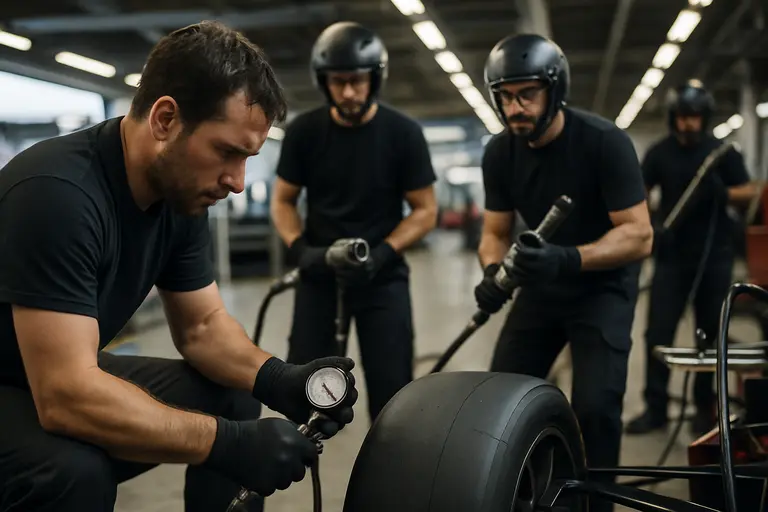
Mental Load Is A Gear Issue
Race-day pressure changes how people think. A driver may be calm in the seat but overloaded in the pit. A crew chief may know the car well but still miss a basic item after a late thrash. That is not a character flaw; it is a normal human response to time pressure, noise, heat, and responsibility. A written list gives the team a shared reference point when adrenaline is high.
This matters most after a problem run. If the car smoked the tires, shook, leaked, or returned with a new sound, the team needs a process that slows the next decision. The checklist should include a post-run inspection path: driver feedback, visible damage, fluid check, tire condition, fasteners, parachute repack if used, and any class-specific safety review. The goal is not to blame someone for a problem. The goal is to make the next call with clear eyes.
Community Support Makes The List Work
Good checklists are shared, not guarded. In the best sportsman pits, the list becomes part of the team culture. One person calls out the item. Another confirms. Someone else marks it complete. That routine gives younger crew members a way to learn and gives family members a useful role beyond waiting and worrying.
There is a community benefit too. When one trailer takes tech prep seriously, nearby racers notice. They borrow habits, ask better questions, and help each other catch small issues before they grow. Across our network, including Cutting Ball, this focus on thorough preparation ensures that participants can enjoy the sport with fewer preventable problems.
For racers trying to balance competition with personal responsibilities, this shared system reduces strain. It can keep a Friday night from turning into a scramble, and it can make the ride home after a hard loss feel less chaotic. You may not control the ladder, the track surface, or the weather. You can control whether the gear was checked, packed, and assigned.
Equipment Checklist Habits For NHRA Teams
After Sonoma, Keep The Process Alive
The Sonoma Nationals on July 17-19, 2026, gave racers another reminder that national-level drag racing rewards preparation before it rewards bravery. The final lesson is simple: treat the Equipment Checklist as a living race tool. Update it after tech inspection. Add the item that almost got missed. Remove clutter that no one uses. Put the next expiration date on the calendar before the trailer is parked.
That habit serves every level of the sport. A professional crew can use it to divide tasks under tight deadlines. A sportsman family can use it to protect a limited racing budget. A first-time helper can use it to understand what matters and why. The list is not there to slow racers down. It is there to protect the people, the car, and the effort that brought everyone to the track.
As a gear reviewer, I care about parts that perform, but I care just as much about systems that help racers use those parts correctly. The best helmet, restraint, shield, tire, or tool still needs a process behind it. After a high-pressure event like Sonoma, the smartest teams do not just ask how the car ran. They ask what the checklist caught, what it missed, and who needs to be part of the next review.