

The Road Atlanta gear conversation changed from pre-event planning to post-event review after the IMSA Michelin Pilot Challenge stop at Michelin Raceway Road Atlanta in Braselton, Georgia, which was scheduled for September 30 through October 3, 2026, according to IMSA event information. For racers, crew chiefs, family helpers, and shop volunteers, the useful work now is simple: check what passed inspection, record what created stress, and make the next load-in calmer.
Road Atlanta rewards disciplined preparation because teams arrive with race cars, support carts, fuel equipment, driver gear, radios, electronics, tires, cooling gear, and safety apparel that all need to work as a system. The rules set the floor, but a strong team culture sets the habit. A young mechanic learning harness checks, a parent organizing firewear, or a volunteer tracking tire sets all support the same goal: giving the driver a safer, cleaner workspace before the car rolls onto pit lane.
Road Atlanta Gear After The IMSA Weekend
Road Atlanta Gear Starts With Verification
Good Road Atlanta gear planning begins with proof, not assumptions. The 2026 IMSA Michelin Pilot Challenge technical regulations required a driver safety harness with at least six points and compliance with FIA 8853/98 or FIA 8853-2016. Driver containment nets for the center and driver-side window openings had to meet FIA 8863-2013 or SFI 37.1. Mandatory electronics included the XAP NTX marshalling display, an approved Driver ID system, the X2 Transponder System, the XAP LED Leader Light system, and an FIA Impact Data Recorder that had to be installed, operational for all on-track sessions, and available for data surrender upon request, as listed in the 2026 technical regulations.
For teams that left Road Atlanta with a clean equipment notebook, the value was not just compliance. It was reduced noise inside the paddock. A checked harness tag, a tested display, and a known transponder mount save time for the people who are already handling food runs, torque checks, driver changes, and family calls from home. That community effort matters in endurance-style race weekends, where the human workload can grow as fast as the technical one.
Why The Date Matters
Because the event had already taken place by October 5, 2026, the right mindset is review rather than preview. Teams should compare their packing list against what was actually used from September 30 through October 3, 2026. Did the spare fire-resistant gloves stay dry and easy to find? Did the driver cooling setup need extra hose routing time? Did the electronics power up before the car reached the grid? These are not dramatic questions, but they are the questions that prevent repeat frustration.
Driver And Crew Safety Requirements
Harnesses Nets And Cockpit Protection
The cockpit deserves patient inspection after a race week. Center and driver-side nets are not decorative gear; they are required safety equipment. Master safety switches, protective padding around cockpit structures, roll cage padding that follows FIA roll cage padding standards or SFI 45 series requirements, and shielding that protects the driver from cockpit equipment in a collision were part of the documented equipment expectations in the research provided.
From a maintenance bench view, the smartest teams treat cockpit parts as wear items. Straps get handled by gloved and bare hands. Nets get clipped and unclipped repeatedly. Padding can be rubbed by belts, driver elbows, drink tubes, and radio wiring. After Road Atlanta, every team should have asked whether each part still sat where the driver expected it. A driver who can locate belts, switches, cool suit lines, and radio connections without hunting is a driver who starts the session with less mental clutter.
Firewear Helmets And Crew Roles
Driver and crew apparel also carried firm requirements. The research notes state that drivers and certain crew members, including refuelers, vent operators, and over-wall crew, needed fire-resistant suits meeting FIA 8856-2000 or FIA 8856-2018, or SFI 3.2A/5 or SFI 3.4/5. Fire-resistant underwear, gloves, socks, and shoes had to follow FIA or SFI 3.3 standards. Helmets had to meet FIA 8860-2010 or FIA 8860-2018, including helmet removal devices where required.
That list can feel ordinary to experienced racers, but it is where families and small teams often carry the burden. Someone has to check expiration labels, keep gloves paired, separate wet gear from clean gear, and make sure the correct person has the correct apparel before pit activity starts. Shared knowledge helps here. Related racing communities and sites like Banat Zayed illustrate how practical experiences can be beneficial when seasoned racers share what works effectively.
Electronics Fuel And Pit Equipment
Mandatory Electronics Need Power And Proof
Electronics are only useful when they are mounted securely, powered correctly, and checked early enough to fix a problem. The XAP NTX marshalling display, Driver ID system, X2 Transponder System, XAP LED Leader Light system, and FIA Impact Data Recorder each deserve a line on the team’s pre-session check sheet. A loose connector or weak power feed can create avoidable pressure for the driver, engineer, and crew member assigned to grid support.
For a community-based team, assigning ownership is often better than adding more meetings. One person can confirm the transponder, another can confirm display function, and another can confirm the IDR status. That approach respects volunteers and young crew members by giving them clear responsibility without burying them in vague instructions.
Fuel Gear Needs Seal Discipline
The fuel system rules in the research notes were direct. All fuel entering the car had to pass through a sealed refueling restrictor. The fuel tank had to be an autonomous supply tank built to comply with FIA Appendix J Article 257A Drawing No. 252-7. Tank height had to be either 1.83 m or 2.00 m, depending on equipment style. The autonomous supply fuel tank and all peripheral refueling connections had to be declared and sealed before the race, and any change after inspection had to maintain seals until the race ended or the car retired.
That rule set places a premium on calm handling. Refueling equipment should not be a last-minute scramble. Teams also had to account for the nominal minimum refueling time noted in the research: full refueling had to take at least 48.0 seconds regardless of fuel volume. For crews balancing speed, safety, and compliance, the lesson from Road Atlanta is to practice the process at a human pace before trying to clean up wasted motion.
| Equipment Area | Required Or Supported Item | Post-Event Check |
|---|---|---|
| Driver Restraint | Minimum six-point FIA-compliant harness | Inspect tags, webbing condition, mounts, and adjusters |
| Cockpit Openings | Center and driver-side containment nets | Check latch action, net tension, and driver reach |
| Electronics | Display, Driver ID, transponder, leader lights, IDR | Confirm power, mounting, labeling, and data readiness |
| Fuel System | Sealed restrictor and autonomous supply tank | Review seals, declared connections, and crew procedure |
Tires Cooling And Garage Workflow
Michelin Tire Planning
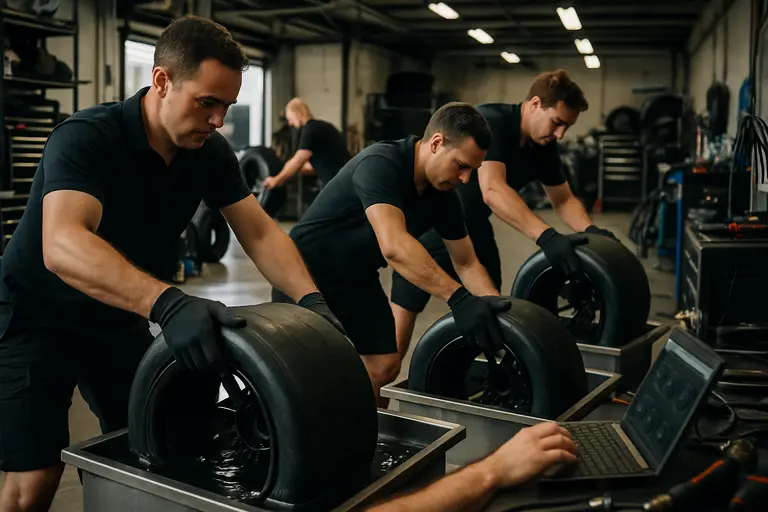
The research notes identify Michelin as the approved tire supplier for the IMSA Michelin Pilot Challenge. They also list the 27/65-18 MICHELIN Pilot Sport GT S9M+ as a common GS and TCR tire, with wet tires also part of the planning picture. Even without turning a race recap into a spending sheet, teams should treat tires as both performance equipment and logistics equipment. Tire inventory affects trailer space, labeling, pressure routines, and the workload placed on crew members who may also be managing driver gear.
After Road Atlanta, a useful review is to ask whether the tire plan was easy for the whole team to understand. If only one person knew which sets were ready, which were used, and which were held back, the system was fragile. Clear labels, pressure notes, and a simple set log support better decisions and make newer crew members part of the process.
Cooling And Pedal Contact
The 2026 research notes also allow perfectly non-slip adhesives on pedals and up to two driver cooling systems, often called cool suits. Those details may sound small until a hot session or a driver change makes comfort and control more difficult. Pedal grip should be checked for clean placement and secure adhesion. Cooling lines should be routed so they do not snag belts, net hardware, steering movement, or driver exit paths.
For more race-week checklist thinking across a different discipline, the same habits appear in equipment checklist lessons from Sonoma NHRA, where safety, compliance, and race-day pressure all meet in the prep area. The series may differ, but the shop behavior is familiar: label the gear, confirm the rule, assign the task, and document what changed.
- Repack driver firewear by role, not by bag size, so each person can find required apparel quickly.
- Photograph sealed fuel connections after inspection for internal team reference.
- Test mandatory electronics before loading, after unloading, and before the first session.
- Inspect cockpit padding, nets, pedal grip, and harness adjusters after every event.
- Keep a tire set log that a new crew member can understand without a long briefing.
Road Atlanta Gear Habits That Last
The strongest Road Atlanta gear lesson is that compliance and care work best when the whole paddock culture supports them. A driver may feel the result directly, but the work belongs to many hands: the crew member checking the FIA labels, the parent drying gloves, the engineer confirming electronics, the volunteer watching fuel seals, and the shop tech repairing a small issue before it becomes a race-week problem.
For teams that competed at Michelin Raceway Road Atlanta from September 30 through October 3, 2026, the next step is not to guess what will matter later. It is to write down what mattered there. Which tools were missing? Which spare parts earned their space? Which safety checks took too long because the owner was unclear? Answering those questions turns Road Atlanta gear from a one-event packing list into a repeatable team standard. That is how racers protect performance, respect the rules, and keep the people around them confident enough to keep showing up.