

What had been framed before April as a set of upcoming tests became a full-season lesson in FR Americas pressure. By the time the 2026 Formula Regional Americas campaign closed at Barber Motorsports Park on October 16–18, drivers had worked through a demanding mix of new reference points, tight session margins, cost pressure, and the personal load that comes with chasing results while keeping a race program alive.
How FR Americas Pressure Built Across 2026
Roster Turnover Reset The Reference Points
The 2026 season opened at NOLA Motorsports Park on April 9–12 and ran across eight rounds before closing at Barber Motorsports Park on October 16–18, with a calendar described before the season as nearly identical to 2025 by Feeder Series. Familiar tracks can help a driver build a notebook, but the pressure does not stay still when the grid changes.
Only one returning race winner, Brady Golan, was on the 2026 grid after he won two races in 2025. The same pre-season reporting noted that 2025 champion Titus Sherlock had stepped away from single-seater racing and that many leading contenders from the previous year had moved on. That left drivers and teams with less recent head-to-head evidence to judge pace, race craft, and tire use against the new field.
For young drivers and their families, that kind of reset changes the emotional feel of a race weekend. A driver who was measuring progress against known names in 2025 had to build fresh comparisons in 2026. Engineers and coaches still had data, but the human side mattered too: who could settle quickly after a poor qualifying lap, who could stay calm in traffic, and who could keep family, crew, and sponsor conversations steady after a difficult result.
Calendar Familiarity Did Not Remove Stress
A stable schedule can help teams prepare transport, spares, and testing routines, yet it can also raise expectations. If a driver has already visited a venue, the paddock may expect cleaner out-laps, faster adaptation, and fewer basic errors. That expectation can weigh heavily on rookies, Masters drivers, and returning drivers alike.
In a series built around development, the lifestyle challenge is not just lap time. It is sleep after travel, school or work responsibilities away from the circuit, sponsor updates, meals that fit the schedule, and enough quiet time to review data without turning every family dinner into a debrief. The strongest paddock groups tend to make those habits feel normal, not dramatic.
Race-Day Margins And Driver Habits
FR Americas Pressure In Qualifying Windows
The race format made every session count. Qualifying set the grid for Race 1, while later race grids were based on fastest laps from previous races, according to Pit Debrief. That structure meant a driver could not treat a race only as a finishing exercise. Clean air, tire care, traffic timing, and one well-built fast lap all carried forward into the next contest.
This made FR Americas pressure feel cumulative. A small mistake in Race 1 did not always end at the checkered flag; it could influence the next grid and the next mental reset. Drivers needed to process errors without carrying tension into the cockpit. Crew members had to keep the car ready while also protecting the driver from noise that did not help performance.
Barber Showed How Small The Gap Became
The Barber finale made those margins easy to understand. On October 17, 2026, Kekai Hauanio claimed the final pole position of the season by 0.231 seconds over champion Brady Golan. That number is not much more than a breath, a slightly late throttle pickup, or a small compromise in traffic. For a driver, the lesson is blunt: preparation has to cover both the car and the mind.
Race-week habits do not need to be flashy. The best ones are repeatable and shared across the small group that supports the driver. Amateur racers and families can take the same principle from the FR Americas paddock and apply it to club events, karting weekends, or motorcycle race days.
- Set roles before arrival: one person handles schedule checks, one watches fuel or charging needs, and one protects the driver’s quiet time.
- Track session carryover: if one session affects the next, write down the tire state, traffic notes, and driver comments right away.
- Keep feedback short: one clear technical point and one confidence point usually land better than a long lecture.
- Build a reset routine: breathing, hydration, and a short debrief can help prevent one mistake from shaping the whole weekend.
For more on calm crew habits under postseason strain, our piece on race day performance plans connects well with the same discipline drivers needed in 2026.
Costs, Car Switching, And Community Support
Budgets Stayed Part Of The Performance Story
Money remained part of the competitive story in 2026. Golan received a US$100,000 scholarship prize after clinching the title, a meaningful award tied to the cost of continuing in the sport. For most racing families, that kind of support is not an abstract detail. It can affect winter planning, testing choices, travel decisions, and whether a driver can stay on a development path.
That is where community matters. Parents, partners, local sponsors, mechanics, and friends often carry parts of the program that never appear on a timing screen. They help load trailers, prep gear, manage meals, communicate with supporters, and keep the driver grounded after hard sessions. Readers who follow community stories across our network may also know about the close-knit support in Ambikapur City, highlighted in Ambikapur City, where local identity and support are part of the same wider sports conversation.
Switching Machinery Demanded Reset Skills
Golan also dealt with driving both LMP3 and Formula Regional machinery during the season, and the research notes that he described the challenge of balancing different cars mid-season. That is a real driver-lifestyle issue, not just a technical footnote. Different seating positions, braking feel, sightlines, cockpit routines, and communication rhythms can ask a driver to recalibrate quickly.
From a gear and maintenance angle, the answer is consistency wherever the rules and team process allow it. Drivers should keep personal kit organized the same way each weekend: helmet, gloves, hydration items, radio leads, cooling equipment, and notes. Crews should label spares clearly and keep pre-session checks predictable. Familiar routines reduce the amount of mental energy spent on avoidable paddock problems.
Masters Class Pressure And Team Responsibility
Older Drivers Carried A Different Load
The Masters class added another layer to the season. Drivers in the over-35 or mature-driver category faced the task of defending class honors while also racing directly with younger competitors. Anthony Autiello, age 43 in 2026, entered as the defending Masters champion and was also seeking strong overall finishes.
That kind of racing can be rewarding, but it asks a lot from the driver away from the car. Mature drivers may be balancing business, family, training, and travel while still needing sharp reaction time and full commitment in qualifying. Their example matters in the paddock because it shows younger racers that development is not limited to one age group. It also shows families that racing can be a shared commitment across life stages.
Team Goals Changed The Weekend
Team pressure also shaped the Barber finale. Crosslink Motorsports entered the final round still in contention for both the Teams’ Championship and the Masters category with Kevin Janzen. In that setting, every driver’s weekend mattered beyond individual pride. A clean race, a smart pass, or a controlled finish could support a larger team target.
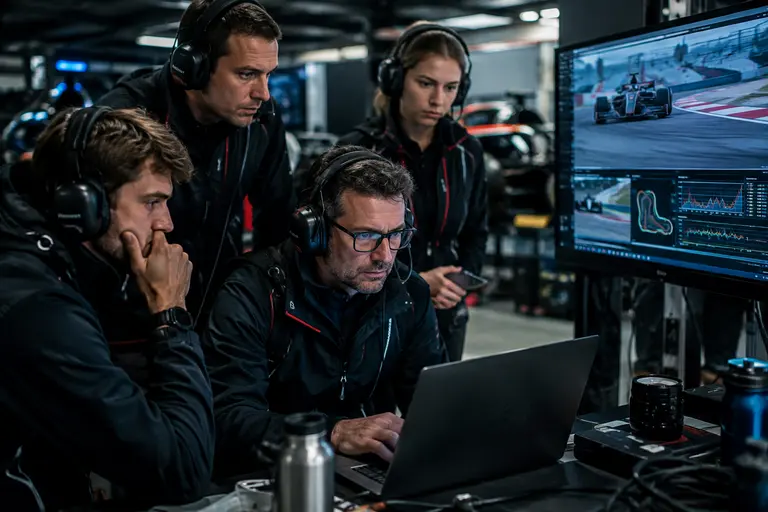
For crews, team pressure calls for calm communication. Drivers need to know the goal without feeling overloaded by it. Mechanics need enough time to do their checks without rushed last-minute changes. Families can help by keeping the paddock tone steady: food ready, schedules clear, and encouragement focused on controllable actions.
| Pressure Point | What It Asked Of Drivers | Useful Support Habit |
|---|---|---|
| Roster turnover | Build new benchmarks quickly | Review data without overreacting to one session |
| Qualifying and fastest-lap grids | Stay sharp in every session | Log traffic, tire feel, and driver notes after each run |
| Budget pressure | Perform while managing future plans | Keep sponsor and family updates clear and honest |
| Masters and team goals | Balance personal pace with group targets | Define race priorities before the driver gets suited up |
What FR Americas Pressure Means For Drivers
Preparation Lessons From 2026
The 2026 season showed that FR Americas pressure was not one single force. It came from a reshaped grid, session formats that rewarded consistency, tight qualifying gaps, financial stakes, car adaptation, Masters class demands, and team championship goals. Each piece touched the driver’s life outside the cockpit.
For developing racers, the practical lesson is clear: treat preparation as a shared system. The driver owns focus, fitness, and feedback. The crew owns the car, gear, and timing. Family and supporters protect the environment that allows both sides to work. When those pieces line up, pressure does not disappear, but it becomes easier to carry.
That is the community value of a season like this. It gives young drivers, Masters racers, mechanics, parents, and sponsors a common reference point. The trophies were decided by October 18, 2026, but the habits built under pressure will keep shaping how these racers prepare for the next paddock, the next car, and the next hard lap.