

mental resilience is not an abstract idea for racers; it shows up in the quiet space between a bad finish and the next green flag. Josh Berry’s 2026 NASCAR Cup Series season gave drivers, crews, and families a clear case study. He endured a long slump, worried about how people viewed his ability, then put together a late-summer run that changed the tone around his year. For riders and club racers, the lesson is practical: confidence is easier to protect when preparation, honest feedback, and community support stay steady.
On September 15, 2026, NASCAR described Berry’s fresh start with Legacy Motor Club and the weight of reputation during his difficult run, noting his concern that perception could overtake what he believed he could still do behind the wheel. The same report also framed the late-season rebound, including a stretch that became the longest streak of top-10 finishes by a Wood Brothers Racing driver since David Pearson in 1976, according to NASCAR’s Sept. 15 report.
Mental Resilience Under A Long Slump
Berry’s 2026 season was not a clean upward line. Before his rebound, 17 of his first 21 races ended in finishes of 25th place or worse, and he had fallen to 33rd in the championship standings. Those numbers matter because racers at any level know how quickly a rough stretch can affect the shop, the trailer ride home, and the conversations with people who help pay for fuel, tires, entry fees, and travel.
Mental Resilience Starts With Honest Self-Check
A racer in a slump has to separate two things: what the timing sheet says and what the driver can still control. Berry’s case showed that reputation pressure can feel real even when the driver still believes in his own feel, race craft, and work habits. That split is familiar in local paddocks. A rider can know the bike is set up better than the finish suggests, yet still feel the pressure of explaining results to family, sponsors, and crew.
For club racers, mental resilience often starts with a debrief that does not turn every issue into a personal failure. Tire wear, restart position, track position, accident damage, pit execution, and setup direction can all shape a result. The strongest post-race talks do not excuse poor performance, but they do sort controllable factors from noise. That keeps the athlete from hauling emotional weight into the next event.
What The Numbers Say
After 21 races with only two top-10 finishes, Berry produced six consecutive top-10 finishes, capped by a third-place result on August 23, 2026, at New Hampshire Motor Speedway. That was not a small mood change; it was a measurable competitive response after months of strain. Late in the 2026 season, his season line included 29 races, no wins, two top-fives, nine top-10s, an average starting position of 22.48, and an average finishing position of 22.31.
Those stats are useful because they prevent the story from becoming too simple. Berry had already won his first NASCAR Cup Series race in March 2025 at Las Vegas Motor Speedway, so the question was not whether he had ever reached a high level. The real teaching point is how a driver with proven peak ability handled a year that tested how others judged him.
The Legacy Move And Team Trust
Legacy Motor Club announced on September 8, 2026, that Berry would drive the No. 42 Toyota starting with the 2027 Cup Series season, replacing John Hunter Nemechek. The announcement was not presented as a quick reaction to one hot streak; Legacy evaluated three years of performance data before making the move, as covered in Legacy announcement coverage.
Why Three Years Of Data Matters
Racers hear plenty of instant judgments after a bad weekend. Data over time gives a team a better way to judge value. A single crash, a poor qualifying lap, or a rough month can distort how a driver is viewed. A longer sample gives room for context, and in Berry’s case, Legacy looked beyond the most recent run of strong finishes.
That approach has a lesson for local teams. Keep notes. Track setup changes, tire pressures, weather, track condition, gearing, maintenance choices, and rider feedback. A notebook does not remove emotion from racing, but it gives the crew something steadier than memory after tempers cool. As a gear and maintenance habit, that record can also protect the athlete. It shows whether a result came from rider error, a setup miss, a worn part, or a race situation outside the rider’s control.
What A Fresh Seat Can Change
Jimmie Johnson, co-owner of Legacy Motor Club, highlighted Berry’s experience, perspective, and wisdom at age 35 as qualities that could help the team. That framing matters because experience is not only a résumé line. It can shape how a driver communicates with engineers, protects the car on difficult days, and helps a team work through disappointment without splintering.
A fresh seat does not guarantee results, and no responsible racer should treat a new team, bike, or sponsor as an automatic fix. What it can offer is a reset in expectations, language, and working rhythm. We covered the human side of that change in a related piece on the Legacy roster shift, with attention to pressure, team culture, and the support system around a driver.
Race-Day Habits That Build Mental Resilience
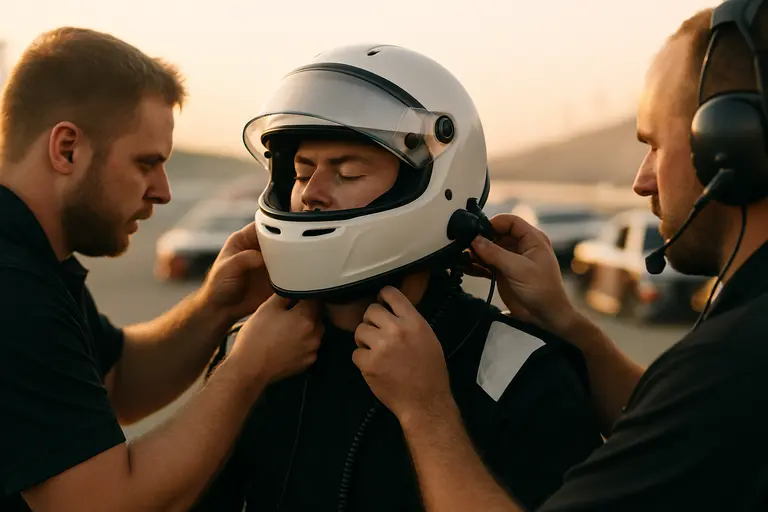
The best race-day habits are boring in the right way. They keep the athlete from spending energy on preventable stress. In a stock car garage, a late setup call can have a big cost. In motorcycle and powersports paddocks, a missed torque check, a loose control, old brake fluid, or a rushed tire-pressure decision can create the same mental drain before the rider even lines up.
Reset The Routine Before The Green Flag
That is mental resilience in working clothes: a repeatable plan that helps the racer recover from yesterday without pretending yesterday never happened. Berry spoke on June 10, 2026, before his 100th career Cup Series start, about the sun coming up after a bad day and treating adversity as a chance to show his children how to handle challenges. That idea fits every paddock. The next morning does not erase the prior result, but it gives the racer a chance to choose a better response.
A useful reset starts before the engine fires. Walk the machine. Check controls, fluids, chain or driveline condition, safety wire where required, tire age, tire pressure, and fasteners. Confirm the plan with the crew in plain language. The goal is not to create busywork. The goal is to quiet the mind by proving that the basics are handled.
Keep Family And Crew In The Loop
Berry’s comments about showing his children how to handle hard moments point to a side of racing that often matters as much as the lap chart. Families absorb the tension of a slump. Crew members hear the frustration. Sponsors and helpers may wonder whether the effort is still worth it. A racer who communicates clearly can reduce that strain.
Use short, honest updates after a difficult run: what happened, what will be checked, what will change, and what will stay the same. Avoid turning every trailer talk into blame. Supporters do not need a perfect speech; they need to know there is a plan. Community also stretches beyond one team. For broader network coverage and motorsports conversation, our related site noticiasbo connects readers with more sports stories from the same publishing family.
- Debrief the facts first: finishing position, incident notes, setup direction, and mechanical checks.
- Protect recovery time: eat, hydrate, cool down, and sleep before making major decisions.
- Thank the helpers: family and crew need to hear that their time and money matter.
- Write the next action: one clear task beats a long list built out of frustration.
Josh Berry’s Mental Resilience Reset
Berry’s 2026 reset is valuable because it does not ask racers to ignore poor results. His season included hard numbers, public pressure, a late run of top-10 finishes, and a confirmed move to Legacy Motor Club for 2027. The useful lesson is how a driver can be judged by results while still building the habits needed to keep working.
The Lesson For Racers At Any Level
Local racers may not face national coverage, but the emotional pattern can feel similar. A few bad weekends can change how people talk in the pits. A crash can make a rider question judgment. A mechanical failure can strain the family budget. The response has to be grounded: gather facts, care for the machine, speak well to the people helping, and return to the next session with a plan that is small enough to execute.
Berry’s fresh start with Legacy Motor Club should be read as a reminder that a racing career is built from more than the last result. Results still count. Preparation still counts. So does the way a racer carries pressure without passing it to everyone nearby. That balance is where resilience becomes visible, not as a slogan, but as a shop habit, a family habit, and a race-day habit.