

The Pimlico Transformation gives grassroots racers a useful case study in how a racing venue can be rebuilt with community benefit, training space, public accountability, and local opportunity in mind. It is not a small-club project, and amateur racers should not pretend a neighborhood track can copy a state-backed redevelopment dollar for dollar. The lesson is more practical: support systems around racing matter as much as the racing surface itself.
For drivers, riders, small stables, mechanics, trailer crews, and family volunteers, the track is never just a place to compete. It is where equipment gets checked, habits get tested, sponsors are greeted, and young racers learn how to carry pressure without losing their footing. Pimlico Race Course’s rebuild shows how a venue plan can connect racing activity to jobs, infrastructure, local business participation, and year-round public use.
As gear people, we tend to start with tires, brake feel, fuel, setup sheets, and safety inspections. That is still the right instinct. But a racer’s week is shaped by the wider support network, too. A better paddock plan, a clear training base, a local hiring policy, or a community board can reduce friction before race day even begins. That same facility-first thinking applies across sports spaces, from motorsports venues to community sports complexes like those featured on a related site in the network.
What Pimlico Transformation Teaches Racers
Pimlico Transformation And Shared Accountability
Maryland’s 2024 HB 1524 authorized the Maryland Stadium Authority to issue $400 million in bonds for the demolition, redesign, and reconstruction of Pimlico Race Course, along with a new training facility; the same project package also included roughly $140 million in cash from the Racing and Community Development Financing Fund, according to the Maryland Stadium Authority project page. Those are public-scale numbers, but the accountability lesson carries down to grassroots racing.
The Pimlico Transformation also shows why racers benefit when roles are clear. The research notes state that the Maryland Thoroughbred Racetrack Operating Authority was dissolved on July 1, 2025, with roles transferred to the Maryland Stadium Authority and the Maryland Economic Development Corporation. For a local racing club, that same principle can be scaled into simpler habits: name who owns tech inspection, who manages volunteer sign-in, who communicates schedule changes, and who checks safety supplies before gates open.
From Big Budgets To Small-Team Discipline
A grassroots racer may not need a bond package, but every racer needs a budget that can survive a full season. Public projects separate capital work, operating needs, and community commitments. Small teams can borrow that structure by splitting expenses into safety, performance, travel, entry fees, and emergency repair money. That keeps the shiny purchase from crowding out the boring item that actually gets a car, bike, kart, or hauler through race day.
For example, a driver tempted by a new data device should first ask whether tires, brake pads, belts, fire gear dates, and trailer spares are covered. The same logic applies to community clubs. Before buying extra hospitality gear, confirm that corner workers, radios, first-aid plans, and paddock flow are handled. Good preparation is not flashy, but it protects the people who make racing possible.
Funding Lessons Racers Can Scale Down
Impact Aid As A Model For Local Tracks
The City of Baltimore’s FY25 spending plan states that, as of FY21, $2.4 million or 24% of Pimlico Local Impact Aid, whichever is greater, is allocated directly to Park Heights Renaissance, Inc.; beginning in FY22, $3.5 million was committed each year for debt service tied to redevelopment and infrastructure improvements at Pimlico, with the current statute providing funds through fiscal year 2032 Baltimore City spending plan. The practical racing takeaway is that venue investment should not stop at the fence line.
Grassroots tracks can apply that idea without public finance tools. A club might dedicate a portion of event surplus to lighting repairs, junior driver education, accessible spectator areas, or volunteer training. A karting group could reserve a small maintenance fund for curbing, barriers, runoff cleanup, and radio batteries. A local motocross organizer could set aside money for dust control and medical access routes. These choices tell racers and families that the venue is being cared for, not just used.
Training Space Before Race Pressure
The research notes state that Maryland acquired Laurel Park for $48.5 million on July 8, 2026, to serve as the training center while Pimlico remains focused on racing. The concept is simple and powerful: training and competition have different needs. A training site can support repetition, coaching, conditioning, equipment checks, and lower-pressure learning. A race venue has to handle timing, spectators, officials, emergency access, and tighter schedules.
Grassroots racers can use the same split in their own planning. Do not make every session a high-stakes test. Use practice nights for braking markers, starts, pit communication, hydration routines, and post-session notes. Save race day for execution. Crews can support that by building checklists around repeatable habits rather than last-minute hero work. For a deeper trackside maintenance angle, our notes on Maryland track maintenance habits connect facility thinking to everyday racer prep.
Community Support That Reaches The Pits
Local Hiring And Skill Building
The project’s research record includes a local hiring initiative intended to prioritize workers from Park Heights and surrounding Baltimore neighborhoods. It also notes participation goals for minority-owned and woman-owned businesses. For grassroots racers, the lesson is not about copying procurement language. It is about asking who benefits when racing grows.
A small track can support local skill building by giving young workers a clear path into flagging, timing, towing, fabrication, photography, food service, cleanup, and basic event operations. A race shop can host open-house maintenance nights where newer racers learn how to torque wheels, inspect belts, read tire wear, and pack a spares bin. A club can make sure new families know where to find tech forms, safety rules, and experienced mentors before they spend money in the wrong order.
This matters because a racer’s support circle often starts with people who are not yet confident in the sport. Parents, partners, neighbors, and friends may be willing to help but unsure where they fit. Assigning useful roles reduces stress and builds loyalty. Someone who starts by helping with tire pressures may become the person who spots a cracked mount before a heat race. Community support becomes safety support.
Year-Round Use Builds Trust
The research notes say the Pimlico redevelopment scope includes year-round non-racing use, with exhibition space, event facilities, a history exhibit, and access improvements. That idea is useful for smaller venues because empty facilities can fade from public attention. If a track is only visible on noisy race nights, neighbors may know the inconvenience better than the value.
Grassroots venues can create trust by hosting safety seminars, charity workdays, youth mechanic sessions, rules meetings, and off-season equipment clinics. These events do not need to be large. A Saturday morning trailer inspection day can prevent breakdowns. A winter helmet-fit session can keep new racers from guessing. A rules Q&A can lower tension before the first green flag.
Race-Day Preparation From A Public Project
Build A Paddock Plan People Can Follow
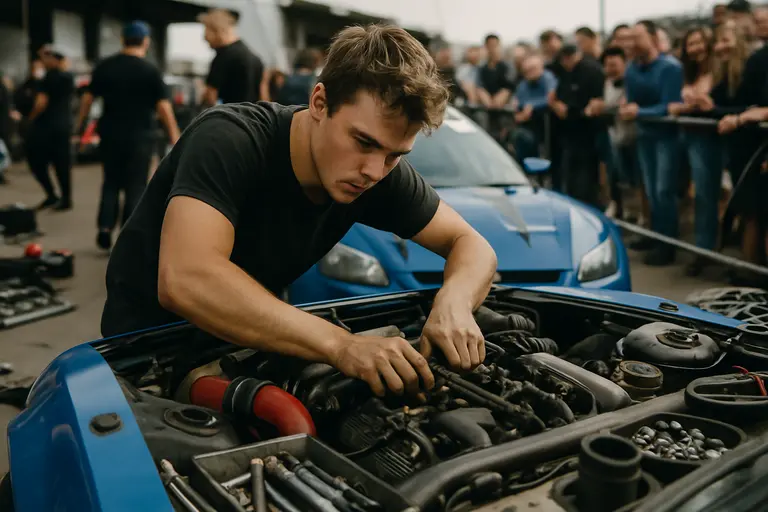
Large projects rely on defined access, staging, and site movement. Small race teams should think the same way. Before leaving home, crews should know where the fuel jug rides, who has the registration folder, who checks lug torque, who handles transponder mounting, and who confirms personal safety gear. The less a racer has to hunt, the more mental energy remains for driving or riding.
For families supporting a racer, this is where calm beats noise. A clear job card can keep three people from doing the same task while nobody checks tire pressures. A short post-session debrief can separate useful feedback from emotion. Ask what changed, what the driver felt, what the data or wear marks show, and what must be fixed before the next outing. Then stop. Over-talking a bad session can drain the athlete faster than the race itself.
Protect The Human Side Of Racing
Public redevelopment is often judged by budgets and buildings, but racing communities are held together by trust. Grassroots racers need that same human layer. A young driver balancing school, work, and racing may need schedule discipline as much as coaching. A club racer with a family may need predictable event timing and realistic travel plans. A mechanic helping after work may need tasks sorted before midnight.
No available research in the notes confirms specific new access programs for amateur racers at the rebuilt Pimlico site, so the lesson here is structural rather than a promise. Still, the model is clear: racing improves when the people around the sport are considered in the plan. That includes workers, neighbors, volunteers, families, and developing competitors.
Pimlico Transformation For Grassroots Racers
The most useful lesson from the Pimlico Transformation is that a racing facility can be planned as a support system, not only as a stage. Bonds, cash funds, impact aid, training space, local hiring, and public oversight are large tools. Grassroots racers can scale the mindset down into clear budgets, safer paddocks, steady maintenance routines, local mentorship, and respect for the people who keep race day moving.
For the racer in the trailer at 6 a.m., this means preparation starts long before the engine fires. It starts with who helps, how tools are packed, how money is protected, how new people are welcomed, and how the venue earns trust beyond the next event. That is the community lesson worth carrying from Pimlico to local ovals, kart tracks, road courses, dirt facilities, and practice lots everywhere.