

Ty Gibbs Resilience became one of the more grounded stories of the 2026 NASCAR Cup Series because it was not built on one fast Sunday alone. It showed in the way Gibbs spoke about family, sponsors, fans, and the people working around the No. 54 car after he earned his first Cup Series win at Bristol Motor Speedway on April 12, 2026. For a young driver who had carried pressure through his early Cup years, the support around him was not background noise. It was part of the work.
That matters to the racing community because Gibbs’ season gave young racers a clear example of how performance and mental steadiness can grow together. The lap times still mattered. The pit calls still mattered. The car still had to be quick. Yet Gibbs kept pointing back to people: the team, his close circle, long-time sponsors, and fans who kept showing up. That is a practical lesson for families and grassroots crews as much as it is a Cup garage story.
Ty Gibbs Resilience Grew Through Shared Belief
Ty Gibbs Resilience After Bristol
Gibbs’ first Cup win on April 12, 2026, at Bristol Motor Speedway gave the No. 54 group a clear marker after earlier stretches without a Cup victory. Six days later, during Kansas-related media availability, he spoke about how special it was to have family, long-time sponsors, and his team present for that moment, while also saying fan support was “super important” as more people wore No. 54 shirts each week Speedway Media reported.
Those comments are worth sitting with because race fans sometimes see a driver’s confidence only through results. Gibbs’ remarks showed something more human. He connected the win to the people who had stayed in the effort before the payoff arrived. That is a mental skill in its own right: knowing where to place your attention after hard weeks. He did not frame support as a bonus. He described it as something that carried meaning even from people who were not on the team payroll.
A Stronger Cup Profile By July 4
By July 4, 2026, the measurable side of the season backed up the feeling that the No. 54 program had taken a step. After 18 of 26 regular-season races, Gibbs had seven top-five finishes and 11 top-10s, with a 9.3 average start and a 13.2 average finish, compared with a 17.9 average finish in 2025, according to NASCAR’s July report. He credited the right people around him for that growth.
Numbers never tell the whole story, but they can confirm that a driver’s words are tied to real gains. The gap between qualifying speed, race execution, and week-to-week recovery can wear on any competitor. Gibbs’ improvement by July 4 suggested that his group had found a more stable rhythm. Ty Gibbs Resilience was not just about blocking out criticism. It was about having a structure that helped him return to the same standard after good days and rough ones.
How Community Support Showed Up In 2026
Team Encouragement Became Fuel
After his second Cup win on August 9, 2026, Gibbs said his season had been great because he had a great team around him, adding that everyone had been encouraging. In the same post-race setting, he reflected that after multiple years without wins, he might have mentally shut down without the support system around him. He named crew chief Tyler Allen as part of that foundation. Those are not small words from a driver whose weekly job is to stay calm under heavy pressure.
For racers at any level, that is a reminder that mental toughness is rarely a solo project. A crew chief, spotter, mechanic, parent, partner, friend, or sponsor can help shape the tone of a race week. Encouragement does not replace honest feedback, but it changes how that feedback lands. A driver who feels backed can process mistakes without feeling defined by them. That is where community support becomes part of performance rather than something separate from it.
Fan Support Reached The Driver
When Gibbs commented on April 18 about seeing more No. 54 shirts and a fan named Zach, it highlighted the significance of fan support. Fans might not make setup calls or change tires, yet their presence can still remind a driver that the effort matters beyond the garage stall. This holds especially true for younger drivers finding their footing amidst Cup-level scrutiny.
There is a practical lesson here for the wider motorsports family. Encouragement from the stands, local short tracks, karting clubs, and online communities can stick with a driver. It does not need to be loud or dramatic. Sometimes it is a shirt, a handshake, a short message, or a familiar face by the fence. For readers who enjoy finding related community resources across the same network, WikiApp is one place that connects broader interests with shared knowledge.
Practical Lessons For Racers And Families
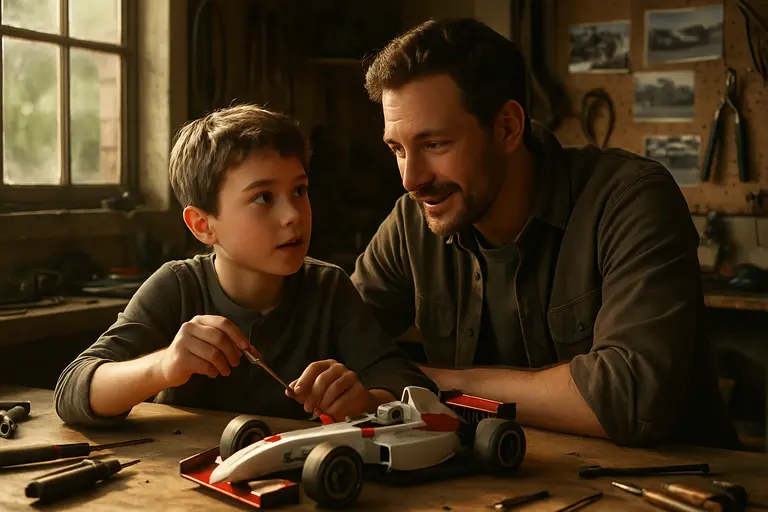
Protect The Inner Circle
Gibbs has publicly spoken in prior years about limiting social media on his phone and focusing on training, family, and internal team relationships. That choice fits the same pattern seen in 2026: he put more weight on trusted voices than on outside noise. For young racers, that is not about ignoring accountability. It is about deciding which voices have earned a place in the post-race debrief.
Families and crews can help by making the driver’s circle clear before emotions run high. Who gives technical feedback? Who handles encouragement? Who helps the driver cool down after a difficult finish? These roles do not need formal titles, but they need respect. We have written before about how racers handle fear and doubt, and this related piece on mental barriers in racing connects well with Gibbs’ example.
Build Race-Day Habits That Travel
The lesson from Ty Gibbs Resilience is not that every racer needs a Cup-level organization. The lesson is that every racer needs repeatable habits and people who help protect them. That can mean packing the trailer the same way each week, having one calm voice on the radio, setting a post-race conversation window, or giving the driver time to breathe before criticism begins.
- Keep feedback specific: Talk about starts, restarts, braking points, or communication rather than attacking character.
- Separate support from strategy: One person can encourage while another handles technical review.
- Respect recovery time: A driver may need a few minutes after a hard finish before a useful conversation can happen.
- Celebrate effort, not only trophies: Progress can be a cleaner race, better focus, or stronger teamwork.
These are simple habits, but simple habits are often what hold a race team together. Community support works best when it is steady enough to survive poor finishes and honest enough to help a driver improve.
What Ty Gibbs Resilience Means For The Garage
Ty Gibbs Resilience in 2026 gave the racing community a useful case study because it tied emotional support to visible growth. Bristol on April 12 was the breakthrough. The July 4 performance markers showed consistency. The August 9 comments showed how much encouragement from the No. 54 group meant to Gibbs as he kept building confidence.
For me, the heart of the story is not just that Gibbs won. It is that he named the people around him. In a sport that can focus so much on the driver alone, he reminded everyone that a racer’s mind is shaped by the garage, the family table, the sponsor relationships, and the fans who keep believing. That is the community impact worth carrying back to every local paddock and every family-run race program.
Not every racer will reach the Cup Series, and no support system can promise a win. What it can do is give an athlete the steadiness to keep learning, keep training, and keep showing up with purpose. That is where the No. 54 story has value far beyond one result sheet.