

Brandon Jones mentorship has become a clear part of Joe Gibbs Racing’s O’Reilly Auto Parts Series story in 2026. At 29, Jones is not an older veteran by life standards, but inside a lineup with 17-year-old Brent Crews, teenage William Sawalich, and 21-year-old Taylor Gray, his experience gives him a different kind of responsibility. He has raced long enough to understand that young drivers need more than speed. They need context, calm feedback, and teammates willing to speak up when the group is not meeting its own standard.
That is where Jones’ role has gained meaning. He is in his 11th full season in the Series and his seventh with JGR, making him the most tenured full-time driver at JGR in the Series’ history, according to a NASCAR report. In a garage full of developing talent, tenure can help turn scattered learning into shared progress. It can also steady the long weeks when results, confidence, and team rhythm all need attention.
Why Brandon Jones Mentorship Matters Now
The Veteran Seat At JGR
Jones’ place at JGR is defined by two things at once: he is still pushing for his own results, and he is being asked to help a young group grow. That balance matters in motorsports because advice carries more weight when it comes from someone still facing the same race-day pressure. A driver who is preparing, qualifying, racing, and debriefing alongside younger teammates can speak from the same week-to-week reality.
The team context is also important. Crews, Sawalich, and Gray are at different points in their development, but each benefits from a teammate who has seen more tracks, more setups, and more emotional swings across a season. Jones has reportedly become a sounding board for younger JGR drivers, helping in debriefs, raising concerns when performance dips, and offering practice advice when approached. That is not a flashy job. It is steady work built on trust.
Brandon Jones Mentorship In Daily Team Work
Brandon Jones mentorship shows up most clearly in the smaller team moments: the post-run conversation, the driver meeting, the practice question, and the honest review after a weekend that did not meet expectations. In 2026, Jones became more vocal in driver meetings and debriefs. His standard was direct: “If we’re not leading laps and winning … those are not really good days,” he said, according to the NASCAR report.
That kind of comment can sound sharp from the outside, but inside a race shop it can be useful if it is tied to shared work. Young racers are often learning how to judge a weekend beyond finishing position alone. They learn to ask whether the car improved, whether feedback helped the crew, whether they managed restarts well, and whether they left the track with better habits than they brought in.
Performance Gives The Message Weight
Results That Support His Voice
Mentorship in racing has to be backed by credibility. Jones brought that in 2026 with performance that gave his words more reach in the garage. As of the regular-season finale before The Chase, he had 15 top-10 finishes, six top-five finishes, one win, one pole, and 135 laps led over 25 races. His average start was 10.84, and his average finish was 12.08. Compared with 2025, his average finish improved by about two spots, and he already had more top-10s than he recorded the previous year.
Jones also won at Chicagoland Speedway in July 2026, his first victory of the season. For younger teammates, that matters because the mentor is not simply talking about how racing should be done. He is still living the demands of preparation, adapting through a long schedule, and producing results that point to growth.
Standards Without Guesswork
One of the more useful parts of a veteran teammate is that he can help define what “good enough” really means. A young driver can finish respectably and still miss a chance to learn. A team can post a decent result and still know it did not execute at the level required to lead laps and win. Jones’ public standard gives younger drivers a reference point: success is not only avoiding mistakes; it is building race-winning habits.
That standard also helps race families and supporters understand the pressure athletes carry. From the outside, a top-10 finish may look simple to celebrate. Inside the team, the same result may include frustration over missed speed or lost track position. This is why support off the track matters. Families, friends, and local racing communities can help drivers process weekends with care, a theme echoed in our piece on support off the track.
What Young Racers Can Learn From His Role
Listening Before Teaching
The strongest mentoring relationships in racing are not lectures. They are exchanges. The research notes show that Jones offers advice when approached, which is an important detail. Young drivers need room to ask specific questions, test ideas, and keep ownership of their growth. A veteran can guide without taking over.
Watkins Glen International in May 2026 offered a practical example. Jones leaned on Brent Crews in road-course settings, and Crews finished fifth. The detail matters because it shows mentorship can move both directions. Jones may be the veteran, but a younger teammate’s strengths can still inform the group. That kind of respect builds a healthier garage culture than one-way instruction.
Preparation Habits That Travel
Brandon Jones mentorship also offers a preparation model for younger racers outside NASCAR. The lesson is not that every young driver needs a national-series teammate. The lesson is that growth speeds up when drivers ask better questions, share what they feel in the car, and learn how to turn feedback into setup direction.
- Ask with purpose: Instead of saying the car is “bad,” describe entry, center, exit, grip, balance, and repeatability.
- Use debriefs well: Treat post-session talks as learning time, not blame sessions.
- Respect different strengths: A younger driver may know one track type better, while a veteran may read race flow better.
- Carry standards calmly: High expectations help most when paired with steady communication.
These habits connect professional racing to local short tracks, karting programs, and club paddocks. A good mentor does not need to have every answer. A good mentor helps the group ask cleaner questions and respond with discipline.
Community Value Beyond One Garage
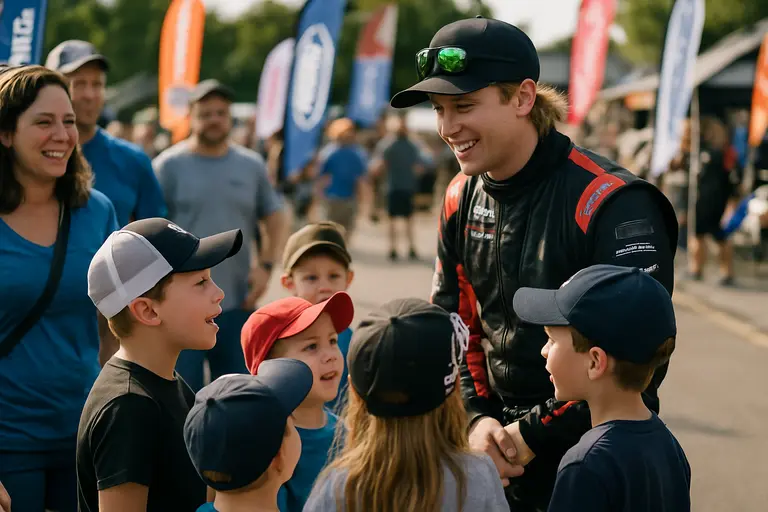
A Shared Language For Race Families
Racing communities often talk about support in terms of money, travel, and tools. Those things matter, but language matters too. A young driver who learns how to explain what the car is doing can work better with a crew chief, talk more clearly with family, and handle setbacks with less isolation. That is where a veteran teammate’s example can ripple outward.
For families watching a driver grow, Jones’ role is a reminder that racing development is rarely a solo effort. It includes crew members, sponsors, parents, shop staff, teammates, and the people who keep a driver steady after a rough finish. Readers who follow stock car development across different series can also find related motorsports coverage through the site SCAR Sports.
Why Continuity Matters
On August 27, 2026, Joe Gibbs Racing confirmed that Jones would return in 2027 to drive the No. 20 car with Menards sponsorship, with team leadership pointing to his veteran presence and ability to mentor teammates as part of the reasoning, according to Frontstretch. That confirmation matters because mentorship improves with time. Trust builds over repeated debriefs, shared travel weeks, and honest conversations after both strong and poor results.
Continuity also helps younger drivers understand that development is not judged by one race alone. A full season asks for patience, self-review, and emotional control. Jones’ 2026 role gives JGR a driver who can help carry those expectations from week to week while still chasing his own performance goals.
Brandon Jones Mentorship And The Next Wave
Brandon Jones mentorship is not valuable because it promises a certain result for every young teammate. The available reporting does not include direct comments from every younger JGR driver about how each one views his guidance, so the fairest reading stays focused on what has been verified: Jones has taken on a more vocal role, younger teammates have used him as a resource, and JGR has valued his presence enough to keep him in the No. 20 car for 2027.
For the wider racing community, that is still a meaningful model. Young racers need examples of how to compete hard without closing themselves off from teammates. They need to see that asking for help is not weakness. They need veterans who will raise standards while still leaving space for growth. Jones’ 2026 season shows how a driver can chase wins and serve the group at the same time.
The future of young racers is shaped in many places: family garages, late-night shop sessions, practice runs, debrief rooms, and honest conversations after the trailer is loaded. In that work, Brandon Jones mentorship offers a grounded example of leadership built through presence, performance, and shared accountability.