
The South Point 400 gear conversation changed from preview to post-race lesson after the NASCAR Cup Series Playoff race ran on Sunday, October 4, 2026, at Las Vegas Motor Speedway. The event weekend was listed for Saturday–Sunday, October 3–4, 2026, with related activities beginning Friday, October 2, 2026, according to the South Point 400 weekend schedule. For fans, families, and volunteer-heavy race groups, the useful takeaway is clear: good packing made the difference between a long, tiring day and a race day that supported the whole group.
Race weekends test more than driver speed. They test family planning, patience in gate lines, sun management, walking comfort, and how well a group shares small responsibilities. A prepared fan helps the track community, too. Fewer bag issues mean smoother entry. Better hearing protection helps children and first-time guests stay engaged. Hydration planning keeps the focus on racing instead of preventable discomfort.
South Point 400 gear Plan For Las Vegas Fans
South Point 400 gear Fit Check
A good South Point 400 gear setup started with fit and function, not bulk. Las Vegas in early October is usually warm during the day, with typical highs around 79–81 °F. Overnight lows can fall into the lower 60s or even the upper 50s °F, and precipitation is usually low. That mix rewarded breathable shirts, sun coverage, and a light layer for evening movement around the property.
The most practical clothing plan was simple: a moisture-friendly base layer, a hat with real shade, sunglasses, sunscreen, and a lightweight long sleeve or jacket. Fans who packed only for the afternoon heat risked feeling chilled later, especially after sitting still for long stretches or walking back through parking areas after dark.
Why Fan Gear Affects The Group
Every race group has its own rhythm. One person handles parking directions, another watches the kids, another keeps the tickets ready, and someone usually becomes the unofficial pack manager. Good South Point 400 gear also reduced stress for that pack manager. The goal was not to carry every possible item. The better plan was to carry the right items in a way that passed inspection and stayed useful from arrival to the final walk out.
Comparing race-day habits with personal performance goals? My All Time Best offers insights in the same network for those tracking improvement and consistency.
Packing Within The Track Bag Rules
Bag Size And Inspection Habits
Las Vegas Motor Speedway policy in the research notes allowed up to two bags per person, with each bag no larger than 18 × 18 × 14 inches, whether clear or non-clear. All bags were subject to inspection. That made packing layout as valuable as the packing list itself. A clear pouch for earplugs, sunscreen, cables, and small personal items saved time because the group could find things quickly without digging through loose gear.
The race-day pack that worked best was divided by use: sun and skin items in one area, tech in another, health and comfort items in a third. Families with children benefited from assigning one adult to carry hearing protection and another to carry snacks or approved drink items. That kind of division kept one person from becoming overloaded.
Items That Stayed Home
The research notes listed several prohibited items, including collapsible chairs, coolers, glass or ceramic containers, umbrellas, laser pointers, noise-makers, air horns, motorized personal transport such as hoverboards or scooters, firearms, and weapons. For a fan, this was not just a rules issue. It was a community issue. A prohibited item slowed down the gate and could force a long return to the vehicle.
Hydration planning required care because coolers were not allowed in the research notes, while refillable water bottle planning was still sensible if the bottle and contents matched track rules. Electrolyte packets were a small, low-weight backup for heat management. The best habit was to verify beverage rules before packing, then keep hydration items easy to reach.
Comfort Gear That Protected The Day
Hearing Protection For Every Age
Hearing protection was one of the least negotiable items from the fan kit. Stock cars exceed 140–150 mph, and main grandstand decibel levels can be extreme, so earplugs or earmuffs were strongly supported by first NASCAR race advice. Children needed properly fitting earmuffs, while adults often did well with foam plugs or reusable filtered plugs.
As a gear habit, hearing protection should be treated like a helmet in the garage: checked before leaving, stored clean, and easy to grab before engines fire. Disposable plugs belong in a small case or sealed bag so they do not collect dust, sunscreen, or pocket lint. Reusable plugs should be cleaned and dried after the race before they go back into the gear bin.
Footwear, Sunscreen, And Seating Comfort
Comfortable closed-toe shoes mattered because race days included walking from parking areas, standing in gate queues, moving between seats and concessions, and visiting restrooms. Soft casual shoes with poor support can feel fine at breakfast and become a problem by midafternoon. A broken-in walking shoe was the safer call.
Sunscreen worked best as a repeated-use item, not a single morning task. Hats and sunglasses carried part of that load, but reflected light and long exposure still added up. A small seat cushion was useful if allowed, especially for fans in grandstand seating for long periods. Since main grandstand seats offered views of the start/finish line and pit road, while Petty and Earnhardt Terraces offered elevated sight lines toward turns 1–2 or 3–4, comfort planning changed by seat location. Elevated views can keep fans more engaged, but they do not reduce the need for sun and hearing protection.
Tech, Seats, And Shared Race Duties
Power And Communication
Portable chargers and phone cables earned their space in the bag. Phones carried tickets, maps, messages, photos, and emergency contact access. A dead battery created avoidable pressure for families that split up for concessions, restrooms, or merchandise. The better habit was to charge the power bank the night before, pack a short cable, and keep both in the same pocket.
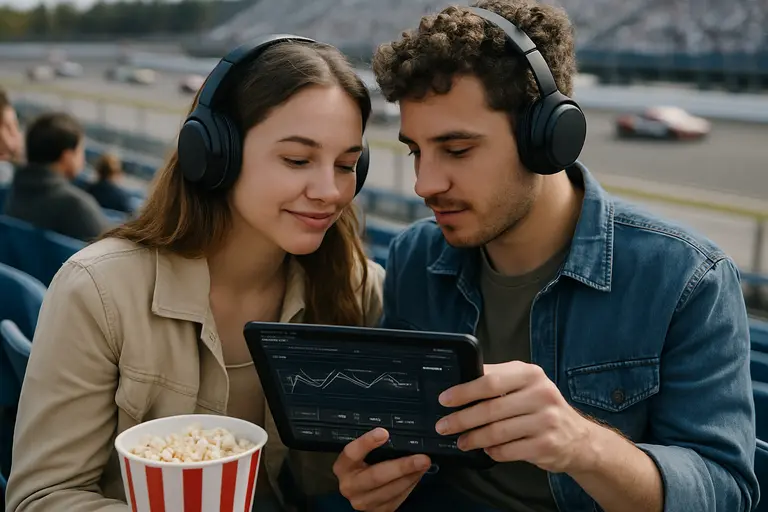
Scanner use or a radio app appealed to fans who wanted a closer sense of driver and crew communication. Since app access, scanner rules, and signal quality can vary, the smart approach was to test equipment before leaving home. A permanent marker for autographs and a small poncho also had practical value; rain is uncommon in early October, but a compact poncho takes little room and can double as light wind coverage.
Lessons From Other NASCAR Stops
Fan prep is a shared skill across tracks. The same habits that helped in Las Vegas also applied after other NASCAR race days: hearing protection, weather layers, bag discipline, and realistic walking plans. For a related same-site breakdown, the New Hampshire NASCAR gear lessons piece carries the same practical mindset for fans and crews who want fewer surprises.
The community benefit is easy to miss until a group has a rough day. One well-packed bag can support a child who gets overwhelmed by sound, a grandparent who needs a shaded pause, or a first-time fan who did not realize how much walking was involved. Gear cannot control the race, but it can protect the people who make the race weekend feel worth sharing.
South Point 400 gear For Community Race Days
South Point 400 gear worked best when it served people first: hearing protection for safety, layers for the desert temperature swing, legal bags for easier entry, footwear for long walks, and charged tech for communication. The October 4, 2026 race has already passed, but its packing lessons still matter for families, fan groups, and grassroots racers who support each other from the grandstands to the garage.
The strongest race-day groups were not the ones carrying the most equipment. They were the ones that planned calmly, respected the venue rules, checked on each other, and kept comfort gear within reach. That is the standard worth carrying into the next Las Vegas race weekend and every track day that follows.